Earlier this year, China sent up a red flag. Its Ministry of Commerce introduced export restrictions that immediately reduced the international supply of seven rare earth elements. The move followed President Trump’s tariffs on Chinese goods, but it reminded Americans that we are always vulnerable. We need a source of rare earth elements that isn’t spelled C-H-I-N-A.
It is important to note here that rare earth elements (REE) are not necessarily “rare,” but they are important because they can be difficult to refine. These 17 natural elements are essential to America’s national security and economic prosperity. They are used in products including cell phones, batteries, airplanes, solar panels, satellites, and military technology, among many others.
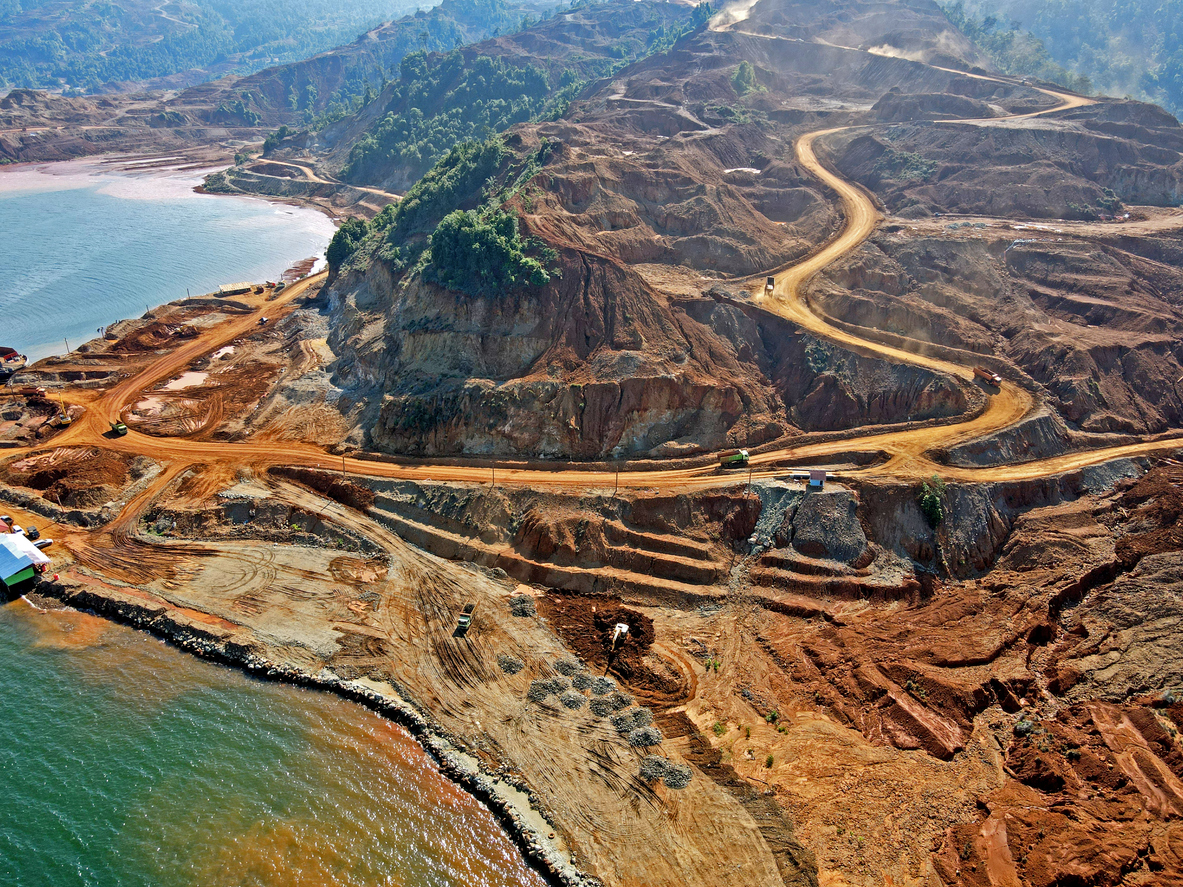
For decades, federal regulations have hampered our ability to mine REEs here at home, while China has eagerly stepped in to fill the void. By doing so, Beijing was able to obtain a virtual monopoly on these elements, meaning it refined 90% of them while the U.S. had just a single mine that could even produce REEs, and even that mine (because it was in California) was subject to strict regulations.
Finally, this is starting to change thanks to President Trump and his appointed leader of the Permitting Council.
The Federal Permitting Improvement Steering Council (Permitting Council) was set up with bipartisan support in 2015 and became a permanent federal agency in 2021. Its goal is to cut the red tape that keeps American companies from being able to proceed with critical infrastructure projects. In this case, that would mean mining and refining rare earths.
Last month, the Permitting Council announced that it has reached a major milestone of 50 new mineral and mining projects to its streamlined approval process known as “FAST-41”. Astonishingly, only one – just one! – of those projects was on the list prior to this year when President Trump issued an Executive Order aimed at boosting domestic mineral production.
“Prior to the Trump Administration, the average time it took to permit a mining project was 29 years,” Emily Domenech, the executive director of the Permitting Council, said. “The Permitting Council is committed to streamlining the federal process, providing transparency to project developers, and ensuring that responsible environmental reviews are as efficient as possible.”
Domenech is in the right place at the right time. She’s spent years in crucial policy positions on and off Capitol Hill. She’s an expert on energy policy, transportation, mining, and of course, permitting.
She now coordinates federal environmental reviews and authorizations for projects that seek and qualify for FAST-41 coverage. This year alone, she has helped usher six rare earths projects through the federal permitting process. These projects will allow American companies to extract and develop many vital minerals right here in the U.S., including zinc, antimony, gold, lithium, titanium oxide, phosphate ore, copper ore and zircon.
More mining and more refining are important steps to take here in this country. We also need to do a better job of reusing the minerals that have already been refined. The administration is helping here as well.
The Office of Critical Minerals and Energy Innovation in Secretary Chris Wright’s Department of Energy recently provided $134 million to fund projects that recycle and reuse REEs from mine tailings, electronic scrap, and other waste or residual materials. It is a relatively small investment that could have a large payback: reusing minerals is an environmentally friendly way to reduce U.S. dependence on foreign sources, strengthen national security, and promote U.S. energy independence.
This is the kind of federal government that American businesses need the most – one that funds innovation and gets out of the way. This is how America wins the race against China.
The views and opinions expressed are those of the author’s and do not necessarily reflect the official policy or position of C3.