It’s always difficult to make predictions, as Yogi Berra said, especially about the future. However, looking back across the history of humanity, it is safe to say that the world will need more energy in the years and decades ahead, as it has steadily used more energy year after year in the past.
Oklahoma has a leading role to play in delivering the carbon-free, renewable electricity we will need, and doing so with a minimal environmental footprint. It won’t be magic. It’ll be the application of grid scale enhanced geothermal.
The Sooner state is in a leading position to develop geothermal because it requires similar technology, processes, equipment, and know-how as the oil and gas industry, which Oklahoma has been driving forward for decades.
Let’s consider how Oklahoma and the United States at large developed hydraulic fracturing (fracking) to extract tight oil. Those old enough to remember the turn of the century may also remember something we haven’t heard much about lately: Peak oil.
Here is how Tom Whipple, who helped guide American national energy policy for three decades as a CIA analyst, described the imminent onset of peak oil: “Shortages were going to occur; prices were going to rise; demand was going to drop; economies would falter; and eventually a major economic depression was going to occur.”
Whipple drafted those words in 2014 for the Falls Church News-Press. In an unusual twist, he was predicting the past. He noted that his assessment had been conventional wisdom “ten years ago.” In an even more unusual twist, his prediction of the past was incorrect: by 2014 it was clear that the United States had become the world’s swing producer of oil. Because of fracking, prices plunged, supply soared, and the economy chugged along.
>>>READ: House Acts to Unlock America’s Geothermal Potential
The word that Whipple alluded to but refused to use was “fracking.” He kept pointing to “shale oil” as if it were obtained through the same process as conventional oil drilling. As Whipple himself noted in that 2014 piece, at that moment, “no other country as yet has gotten significant amounts of shale oil or gas into production.” Perhaps that was because no other country had given birth to Oklahomans like Lloyd Noble and Harold Hamm.
Hamm grew up as the youngest of 13 siblings. His entrepreneurial spirit was on display at a young age, as he founded Continental Resources in 1967 when he was just 21-years-old. The world was awash in oil at that time, with a barrel costing less than $30 (in 2026 money). Still, Hamm saw the value of developing different ways to drill for oil. Continental’s innovations showed that fracking worked, opening huge new areas for development.
“Within two decades, it really transformed the entire industry,” Hamm said during an appearance at the University of North Dakota, where he established a school of geology and geological engineering. “We went from what everybody considered terminal decline of our production in the U.S. and having to import from the Middle East or Canada. Since that point, U.S. production has tripled to about 13 million barrels a day.” That is to say, fracking ended peak oil.
Even before fracking, another notable Oklahoman, Samuel Roberts Noble, showed the state and the U.S. the way to develop oil fields.
Noble was born before Oklahoma was even a U.S. state. He made a fortune in the traditional drilling industry of the pre-World War II era. In 1945, he set to work improving conditions above ground. He founded the Noble Research Institute to help revitalize farming and ranching after the Dust Bowl. The institute has grown into the largest independent agricultural research organization in the U.S. and employs nearly 400 people from 20-plus countries. His life and career highlight Oklahoma’s path from the first, land-rush settlers, to today’s high-tech drillers.
Because of men like these, the landscape is ready for grid-scale geothermal.
Many think of geothermal energy as geysers: Old Faithful in Yellowstone National Park erupts with clocklike precision. However, in most places, the heat from deep in the Earth simply remains down there, far beneath our feet under solid rock.
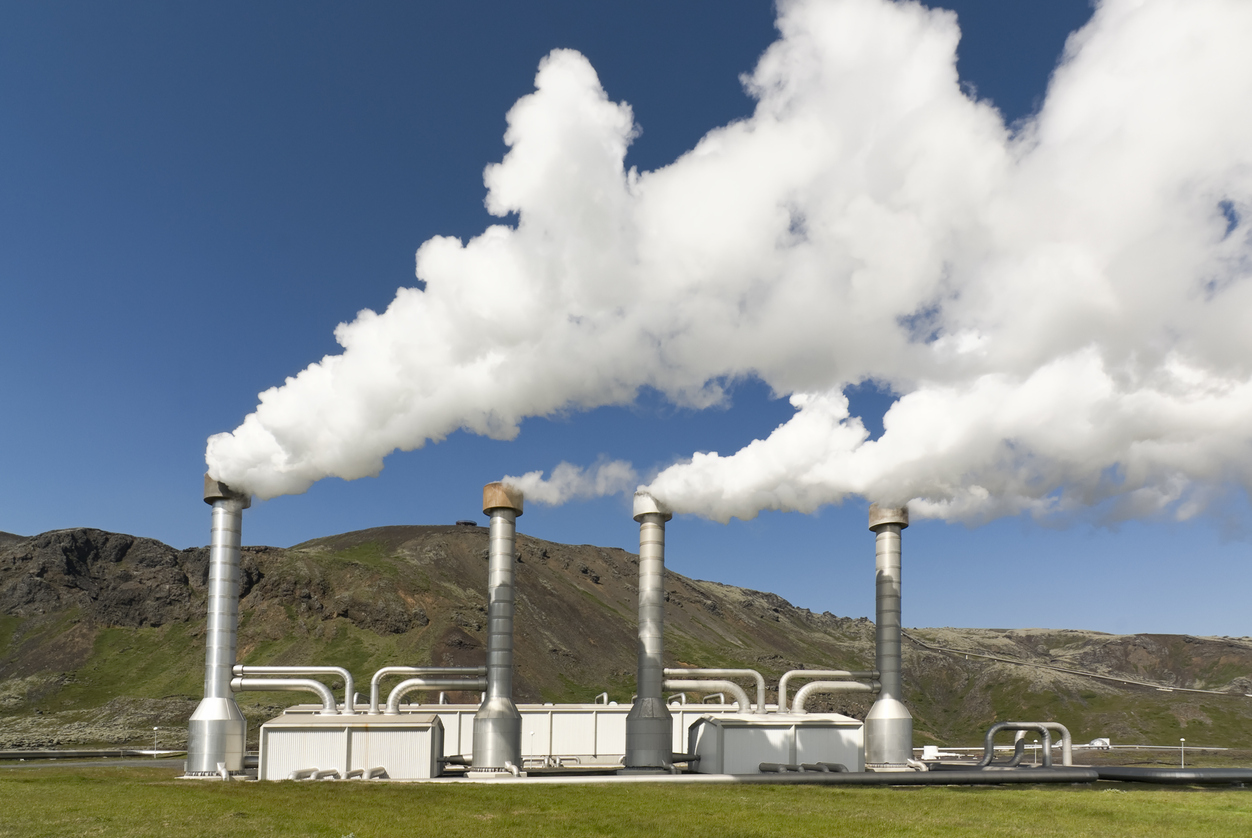
An enhanced geothermal system injects fluid into fissures deep within the Earth. The fluid heats up and brings that energy to the surface to turn turbines and generate electricity. When it cools, it can be reinjected into the ground as warmer fluid is extracted.
A study conducted last year by Princeton analysts indicated that advanced geothermal could supply up to 20% of the electricity the country needs by 2050. That’s clean, renewable, zero-emission electricity generation with a minimal above ground footprint.
A large chunk of America’s energy future is underground, just as it was when Lloyd Noble and Harold Hamm were getting started. They, and others in Oklahoma’s energy industry, have shown us how to unlock the future.
The views and opinions expressed are those of the author’s and do not necessarily reflect the official policy or position of C3.