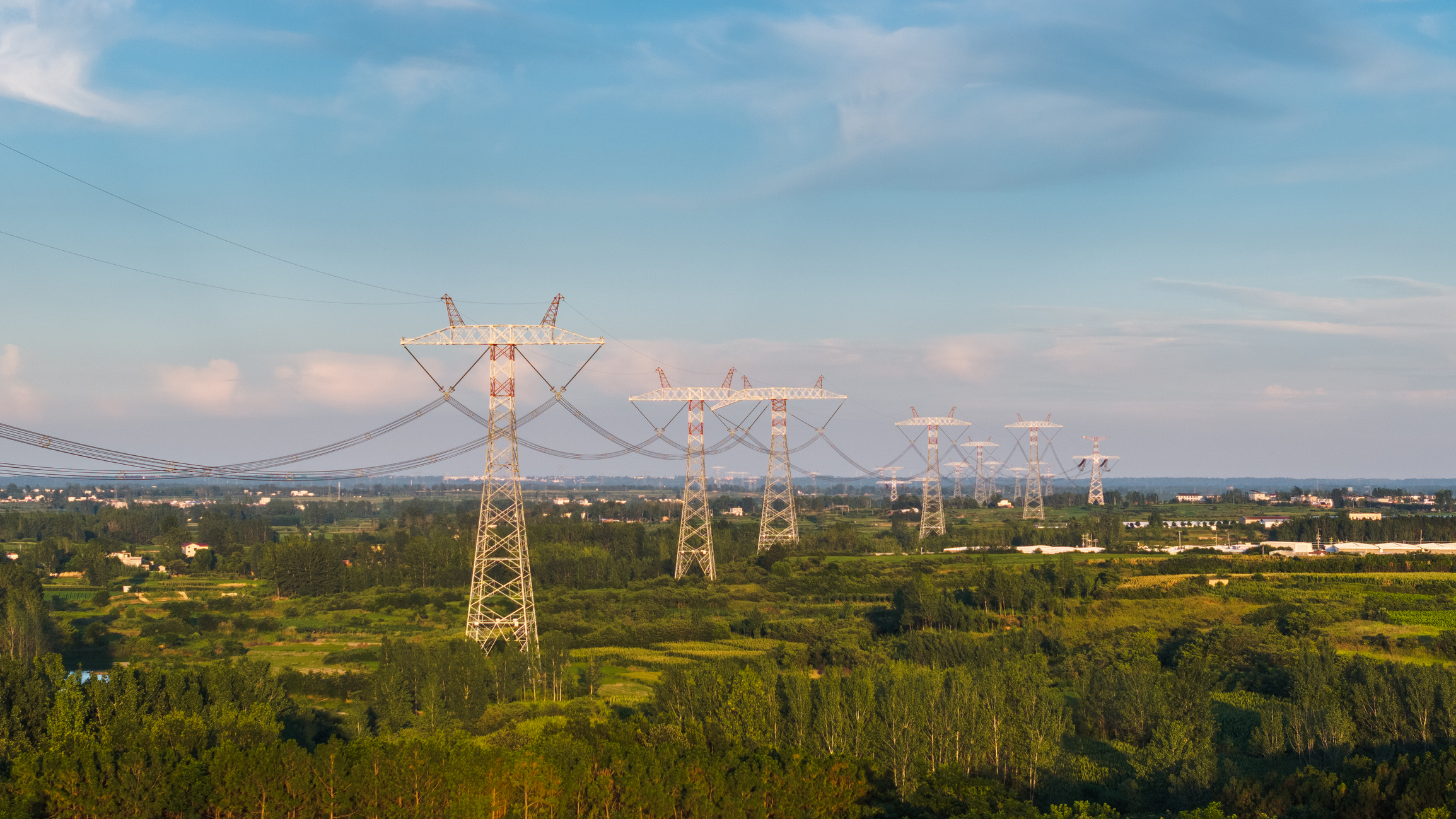
America needs more electric transmission, the high-voltage lines that carry electrons from power plants to communities nationwide. But under today’s policies, building those lines takes too long and costs too much. Without a substantial expansion in transmission capacity, the country is at risk of rising energy costs, a less reliable electric grid, and stymied global leadership in AI.
A thoughtful approach to upgrading the grid is paramount. That sense of urgency and responsibility underpinned a policy framework recently published by C3 Solutions and a coalition of partners. Good transmission policy should move projects through the system quickly, expand the grid cost-effectively, and allocate costs fairly, with the beneficiary paying.
A recent hearing of the House Energy and Commerce Subcommittee on Energy highlighted both the challenge and the available solutions. Members got most of the puzzle right, including how to accelerate the federal permitting process and ensure fair cost allocation.
But when it came to one critical piece, letting private companies compete to build the grid, the conversation fell short. With substantial transmission and grid upgrades on the near-term horizon, it is crucial that ratepayers only fund the most necessary and cost-effective projects. Eliminating barriers to merchant transmission projects provides a direct pathway to more affordable, reliable electricity.
Merchant transmission lines are built by private developers who put their own capital at risk. Unlike projects built by traditional utilities, whose costs are passed on to ratepayers whether the line proves worthwhile or not, merchant developers recover their investment only if they can sign up paying customers, such as generators looking to reach distant markets or utilities looking to import cheaper power. If the project doesn’t deliver value, the developer absorbs the loss, not the public. This model has been especially helpful for long-distance lines, which have otherwise proven challenging to construct. However, the failure to integrate merchant assets into transmission planning has repeatedly challenged the construction of these lines.
>>>READ: How Renewables and Batteries Saved the Texas Grid in 2025
In theory, the merchant model is a win-win. Private capital bears the risks, and consumers pay for transmission capacity only once it’s actually serving them.
In practice, regulated utilities have little reason to welcome merchant projects. Under the traditional cost-of-service model, utilities earn a regulated rate of return on the transmission infrastructure they build. Merchant transmission can displace capacity that utilities could build and the profits they would have earned on it. Connecting a new transmission line can also require substantial upgrades elsewhere on the system. Utilities can use this as leverage, and are incentivized to saddle merchant projects with large shares of upgrade costs or simply delay their connection to the grid.
Allowing these procedural roadblocks to proliferate is anti-competitive and risks further increasing electricity costs for households and small businesses. Nonetheless, they persist despite considerable regulatory oversight.
In many parts of the country, utilities participate in regional transmission organizations [RTOs] and independent system operators [ISOs], which plan transmission across multiple states and are themselves overseen by the Federal Energy Regulatory Commission [FERC]. In principle, these regional planners are supposed to evaluate all options on their merits, including merchant projects, and pick whichever best fits the system’s needs.
In reality, they often fail to assess merchant transmission lines as rigorous alternatives to utility-favored construction during the planning stage. This creates a blind spot in which neither the utility nor its transmission planners provides cost-effective private proposals with a chance to compete.
Congress and FERC are empowered to change this costly status quo. Recent FERC planning reforms already require regional planners to look farther ahead and be more transparent about how they choose projects. Building on that, FERC could add a requirement for planners to define how and when merchant projects are integrated into planning models. This step would immediately increase transparency around how RTOs and ISOs assess projects’ merits, enabling private developers to deliver infrastructure better aligned with the grid’s needs.
>>>READ: A Consumer-First Framework for Transmission Reform
If FERC does not act on its own, Congress should direct it to initiate a rulemaking along these lines. Such a rulemaking would ensure that the rules governing the planning of new lines allow for private capital and competition.
Trillions of dollars are set to be invested in the grid in the coming years. There is a serious risk of an expensive, over-built system that consumers will be stuck paying for. Merchant projects, which make up just a sliver of all transmission infrastructure (<1% in the Mid-Atlantic) today, offer cost-competitive alternatives. Long-distance merchant lines could also improve the grid’s nationwide connectedness, making the system more efficient.
A consumer-first approach demands real competition around who builds the grid. By directing regional planners to consider merchant projects as genuine alternatives rather than afterthoughts, the federal government can help deliver a grid that is more affordable, more reliable, and better prepared for the demands of an AI-powered economy.
The views and opinions expressed are those of the author’s and do not necessarily reflect the official policy or position of C3.