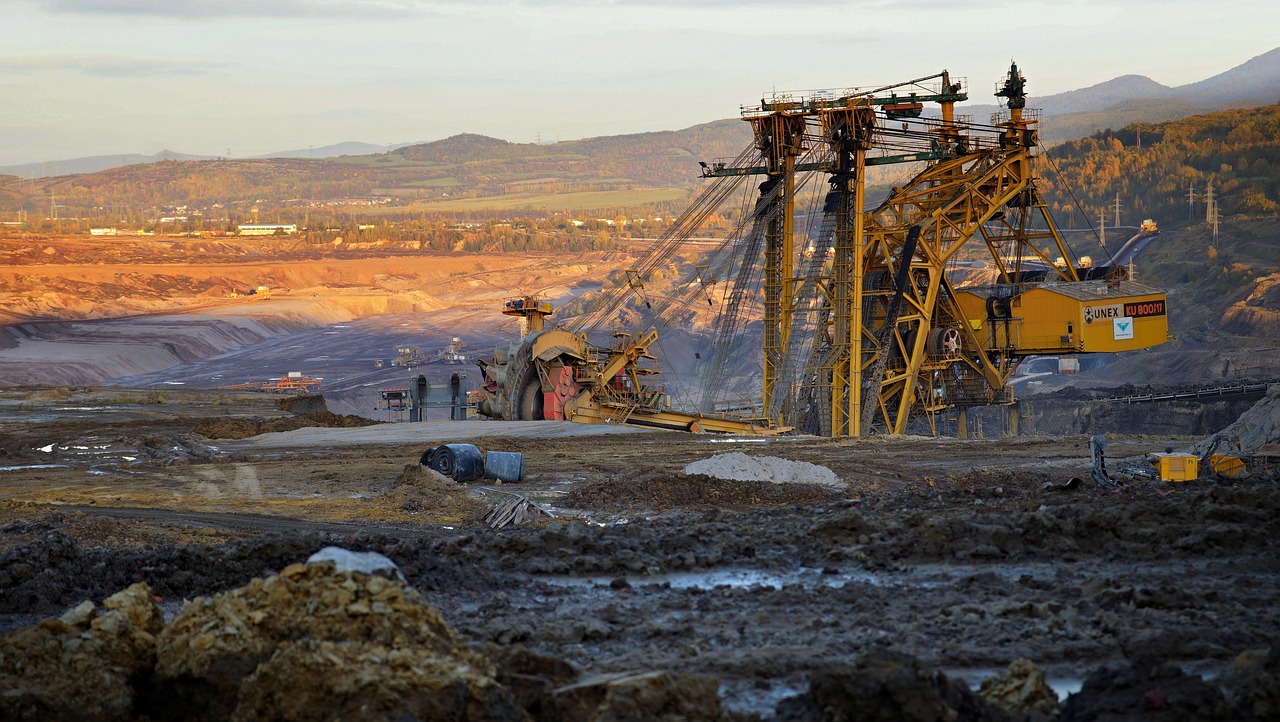
Critical minerals have become a marquee issue in Washington over the past several years, driven by growing concern that the United States and its allies depend too heavily on China for materials that are indispensable to both the civilian economy and the defense industry. These minerals and their derivative products are used in semiconductors, electric vehicles, grid infrastructure, advanced electronics, and weapons systems, making reliable access to them a potential national-security issue. Congress has responded with a range of proposals aimed at reducing supply-chain vulnerabilities and expanding access to alternative sources.
One such proposal, the Developing Overseas Mineral Investments and New Allied Networks for Critical Energies (DOMINANCE) Act, sponsored by Representatives Young Kim (R., CA) and Ami Bera (D, CA), is scheduled for markup by the House Foreign Affairs Committee this week. The act generally represents a positive step toward improving certain aspects of U.S. critical minerals policy, particularly by creating new capacity at the Department of State and improving coordination across federal agencies. However, the bill also risks opening the door to counterproductive interventions while doing relatively little to address the underlying causes of America’s dependence on China.
The key concern is that China controls critical bottlenecks in the supply chains for many of these materials, particularly refining and processing infrastructure. Last year, in response to new U.S. tariffs and semiconductor controls, China announced export restrictions on several crucial rare earth elements and magnets. Those restrictions are currently in limbo after President Trump and President Xi Jinping negotiated a one-year suspension. But the episode highlighted the potential disruptions such controls could create for the global economy and for defense supply chains that depend on reliable access to specialized inputs.
In response, policymakers have made supply-chain security a priority. But many proposals rely on non-market interventions to force diversification. The risk is that the cure could prove worse than the disease: subsidies for mining or refining, trade barriers, price floors, or other market manipulations could force Americans to pay more for critical minerals through higher taxes or artificially inflated prices. Policymakers should ensure that any response limits the risks of government failure and overreach.
>>>READ: Harvest Deep-Sea Minerals to Combat China
The DOMINANCE Act avoids explicitly imposing these types of policies. As a bill developed by the House Foreign Affairs Committee, its main focus is expanding the capacity and tools available to the State Department to address critical-minerals vulnerabilities. It does so through four key provisions:
- It would establish a Bureau of Energy Security and Diplomacy and a Senate-confirmed Assistant Secretary to lead U.S. international energy and critical-minerals diplomacy.
- It would create Energy Security Compacts, which are intended to coordinate tools across the State Department, Department of Energy, Development Finance Corporation, Export-Import Bank, and Department of Commerce to support energy and mineral investments abroad.
- It would codify U.S. participation in the Forum on Resource Geostrategic Engagement (FORGE), successor to the Minerals Security Partnership, including coordination with allied governments on project databases, information-sharing, investment facilitation, and joint ventures for key minerals.
- Finally, it would expand mining and critical-minerals education through a new Fulbright fellowship and visiting-scholar programs focused on mining and mining engineering.
The provisions are, broadly speaking, a step in the right direction. As long as Congress sees critical minerals as an area where some government involvement is warranted, agencies should have the necessary capacity to ensure that any policy tools are used efficiently and effectively. Given the patchwork of rules, programs, and funding streams that tend to emerge around any hot policy issue, better coordination across agencies is also a useful first step toward ensuring that policymakers consider the broader picture.
The downside of the Act, however, is that it leaves the available policy tools relatively open-ended and could push the administration toward several misguided approaches. For example, both Energy Security Compacts and FORGE could drive federal support for critical-minerals projects in allied countries. Provisions to support information sharing and facilitate market-driven investment across allied countries are worthwhile. But government-led investment risks directing taxpayer dollars toward projects that private investors would otherwise reject as too costly or commercially unviable. Likewise, the Trump administration has already indicated that it may use FORGE to establish price floors for critical minerals by setting reference prices and using adjustable tariffs to enforce them.
The DOMINANCE Act could promote more efficient outcomes by placing explicit boundaries on the policy tools available to this and future administrations. Congress should make clear that counterproductive measures such as subsidies, price floors, and trade restrictions are off the table.
>>>READ: A Major Mining Milestone
More importantly, while the Act represents positive, bipartisan movement in some key areas, the underlying problems in U.S. critical-minerals policy will remain. Expanding Fulbright scholarships to facilitate the exchange of mining knowledge and expertise is a creative way to strengthen the U.S. mining talent base. But if companies cannot navigate the permitting hurdles required to open or expand mines and processing facilities in the United States, those efforts will have limited effect. A more complete solution must address the reasons critical-minerals mining and processing capacity migrated to China in the first place, including permitting delays, burdensome environmental rules, and high production costs.
Overall, the DOMINANCE Act is a useful but incomplete contribution to U.S. critical minerals policy. Its emphasis on diplomacy, interagency coordination, and allied cooperation is preferable to more overtly protectionist or subsidy-heavy proposals. But without clear statutory limits, the Act could be used to advance price floors, trade restrictions, and uneconomical government-backed investments. Congress should preserve the Act’s strengths while making clear that critical minerals security should not become an excuse for open-ended industrial policy. The ultimate goal should be a more resilient, market-oriented critical-minerals supply chain, not competition with China through market manipulation that leaves taxpayers and consumers bearing the costs.
The views and opinions expressed are those of the author’s and do not necessarily reflect the official policy or position of C3.