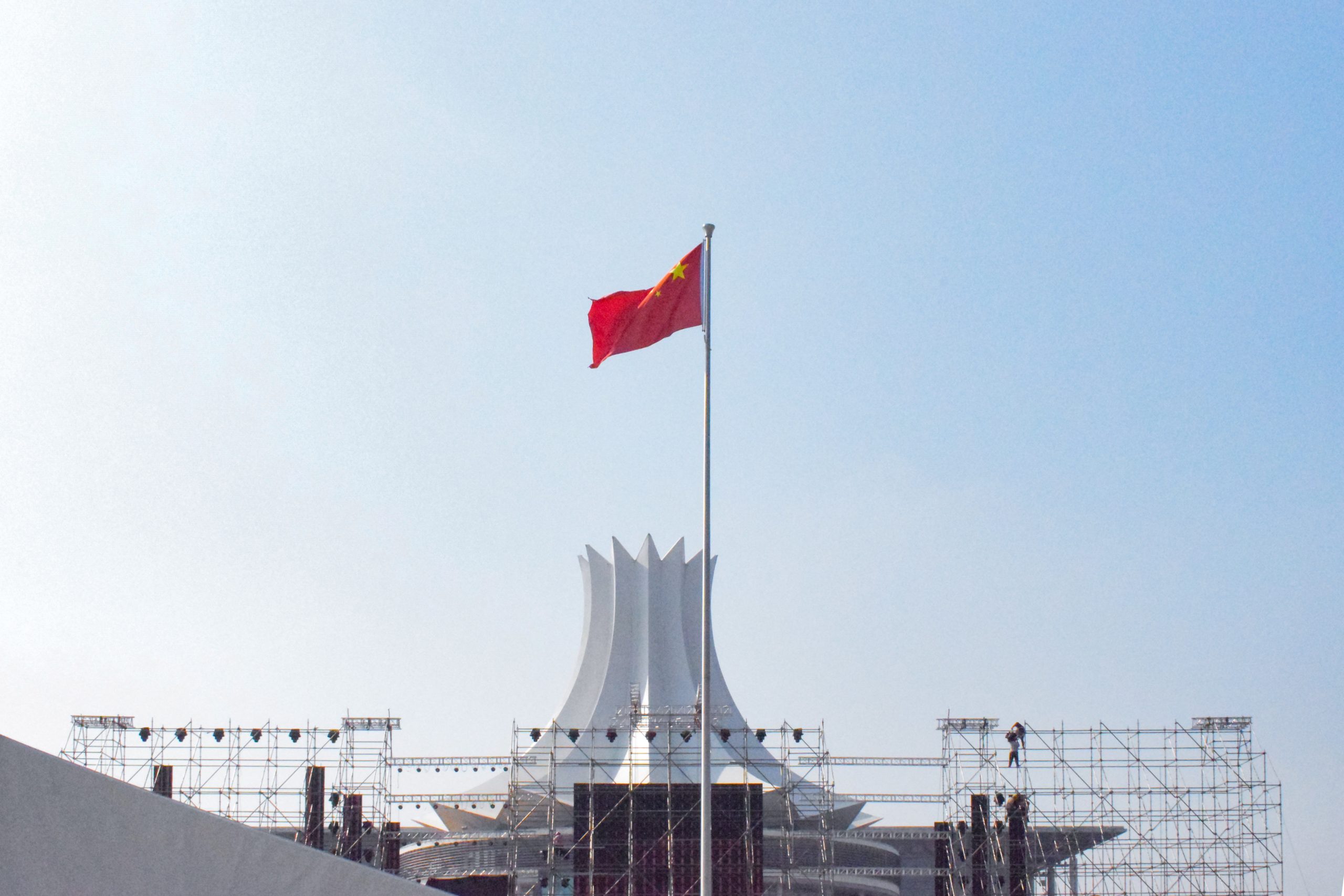
China’s monopoly on rare earth elements is not accidental. The United States, once the world leader in rare earth element production, helped create its own decline as environmental regulations and shifting industrial economics pushed production capacity offshore, allowing an increasingly adversarial nation to gain leverage over materials essential to defense systems and advanced technologies. Reasserting U.S. independence will require rebuilding our domestic supply chain and renewed coordination between government and industry.
For much of the postwar period through the early 1980s, the United States led the world in rare earth element production and refinement. As chronicled in Reimagining U.S. Rare Earth Production by Sulgiye Park and colleagues, the collapse of U.S. industrial alignment coincided with China’s deliberate rise. Investigative reporting by Marc Morano adds another layer to the story: an environmental inflection point that accelerated the shift.
The modern rare earth industry in the United States began in 1949, when the Molybdenum Corporation of America (Molycorp) started extracting rare earth elements at Mountain Pass, California. For years, the U.S. government served as the primary buyer, stockpiling these materials for national defense and emerging technologies.
By the 1960s and 1970s, Mountain Pass had become the center of the global rare earth industry. Molycorp processed between 150,000 and 440,000 metric tons of ore annually as commercial demand expanded. Downstream manufacturing was equally robust. Magnequench, a General Motors subsidiary established in 1985, supplied roughly 85 percent of the rare earth magnets used in U.S. defense applications.
For a time, the system worked. Then the environment surrounding the industry—both literal and regulatory—began to change.
The creation of the Environmental Protection Agency in 1970 reshaped how industrial activity intersected with environmental stewardship. In 1977, Union Oil Company of California (Unocal) acquired Molycorp, inheriting both a strategic industrial asset and growing environmental liabilities in the Mojave Desert.
Those liabilities became increasingly difficult to manage. During the 1980s and 1990s, wastewater pipelines at Mountain Pass repeatedly ruptured, releasing radioactive slurry containing thorium and other elements onto the surrounding landscape. Authorities later estimated that hundreds of thousands of gallons of contaminated wastewater spilled during the decade.
>>>READ: Harvest Deep-Sea Minerals to Combat China
Complicating matters further, the mine sat within habitat critical to the Mojave Desert tortoise. California listed the species as threatened in 1989, and the federal government followed with protection under the Endangered Species Act in 1990.
Marc Morano’s 1998 investigative report Desert StormTroopers describes how environmental enforcement escalated to the point that dozens of federal and state officials descended on the site and employees were required to undergo what was termed “tortoise sensitivity training.” The episode symbolized the growing tension between environmental protection and domestic mineral production.
As regulatory scrutiny rapidly intensified, economic consequences soon followed. By 1998, Unocal was exporting thousands of tons of rare earth concentrate to China for processing. What began as a cost-saving arrangement gradually shifted the center of gravity for the industry overseas. In 2002, the Mountain Pass mine shut down entirely. What remained in the United States was geology, not capability.
China, meanwhile, had been preparing for this moment. Beginning in the 1980s, Beijing designated rare earths as a strategic resource and invested heavily in mining, refining, and processing capacity. Between 1985 and 1995, China’s rare earth production increased dramatically. By 1992, China had surpassed the United States in rare earth oxide production.
In 1999, China pulled a strategic lever by introducing export quotas limiting the volume of rare earth products leaving the country. The message was unmistakable: control would be exercised not at the mine, but at the processing and manufacturing stages where the true power lies.
By the early 2000s, China controlled the most critical chokepoints of the rare earth supply chain: separation, refining, and magnet manufacturing. According to the U.S. Geological Survey’s 2025 assessment, China now holds roughly 44 million metric tons of rare earth reserves, about 36 percent of the global total.
>>>READ: A Major Mining Milestone
When environmental regulation, industrial policy, and national security operate in isolation, supply chains do not disappear—they migrate to places with weaker constraints. In the 1990s, shifting rare earth processing to China was largely viewed as a corporate calculation about compliance costs, environmental liability, and profit margins. Three decades later, the consequences are geopolitical. Leverage now sits at the national level in the hands of a strategic competitor. Materials once sent offshore to reduce regulatory exposure are now controlled by a rival capable of constraining the supply chains that power modern economies and national defense.
History matters because it reveals how strategic industries are lost, and how they might be rebuilt.
Reclaiming American capability in rare earth elements will not come from mining alone. It requires rebuilding the entire ecosystem: processing capacity, magnet manufacturing, recycling technologies, and coordinated investment between government and industry.
Environmental protection and industrial capability cannot be treated as opposing forces. If the United States intends to regain leadership in rare earths—and the technologies they enable—those priorities must move together.
Aurelia S. Giacometto is a partner at Earth & Water Law. She served as the 22nd Director of the U.S. Fish and Wildlife Service during the Trump Administration (2019–2021) and as the 14th Secretary of the Louisiana Department of Environmental Quality. She is an attorney, businesswoman, biologist, and international speaker.
The views and opinions expressed are those of the author’s and do not necessarily reflect the official policy or position of C3.