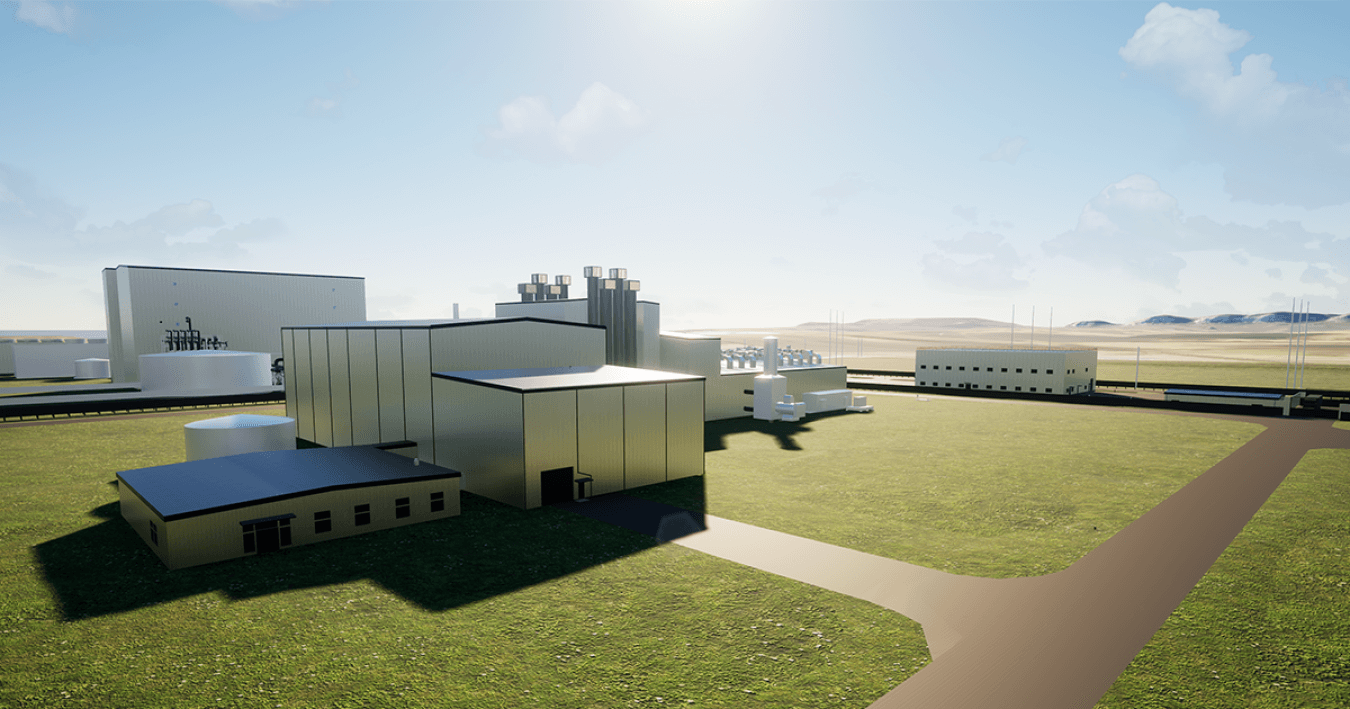
In a welcoming milestone, TerraPower received approval from the Nuclear Regulatory Commission (NRC) for a construction permit for its advanced nuclear power plant in Kemmerer, Wyoming. The review, completed ahead of schedule, provides a hopeful signal that the United States is finally turning the corner on one of the biggest barriers to clean energy innovation: an outdated, slow, and unpredictable licensing and permitting system.
NRC’s decision allows TerraPower to begin nuclear construction on what will be the first commercial advanced reactor permitted in decades. The Natrium design is a sodium-cooled reactor paired with molten-salt energy storage, capable of producing 345 megawatts of electricity and ramping up to roughly 500 megawatts during demand spikes. The molten salt battery gives the plant the flexibility to ramp up as needed. As electricity demand increases from data center growth, industrial consumption, and increased electrification, advanced nuclear can help provide affordable, dispatchable power.
For decades, America has talked about the promise of advanced nuclear energy. Smaller designs, improved safety characteristics, flexible output, and the potential for factory-based manufacturing could make nuclear power more affordable and deployable. While cost competitiveness has always been a concern, the reality is that government policy and antiquated regulations have inflated nuclear energy’s costs.
Recent bipartisan efforts in Congress (NEIMA in 2019 and the ADVANCE Act in 2024) include provisions to modernize licensing and permitting, increase international collaboration, and reduce costs for investment and deployment. The bipartisan ADVANCE Act directed the NRC to reduce licensing fees, strengthen its capacity to review advanced technologies, and streamline approvals for reactors built at existing power plant sites or other brownfield locations. Furthermore, the Trump administration has taken steps to right-size regulations that impose unnecessary costs and slow the pace of innovation and investment.
>>>READ:: Reforming Radiation Standards to Unlock Nuclear Energy’s Full Potential
To be clear, the process remains rigorous and time-consuming. TerraPower engaged in years-long pre-application work with the NRC, dating back to 2022. The company submitted its construction permit in March 2024, which the NRC accepted two months later. The NRC targeted August 2026 to complete the review, but finished several months ahead of schedule. Even with its construction permit in place, TerraPower must obtain a separate operating license before the plant can generate electricity, a process expected later this decade. The plant likely won’t be online until at least 2031.
Nevertheless, the approval to start building marks two important milestones. It is the first construction approval of a commercial nuclear reactor in nearly a decade and the first one for a non-light-water reactor in nearly four decades. Critically, the NRC followed a performance-based, risk-informed review. With a variety of small modular and advanced reactors, it will be essential for the licensing and permitting process to be technology-neutral, risk-informed, and flexible. Reviews of applicants should be specific to the technology, not broad, blanket requirements that have little to do with assessing risk and performance for that technology.
If regulators get that right, the Natrium reactor in Wyoming will not be remembered as an isolated success. It will be remembered as the moment when advanced nuclear finally began moving from promise to deployment in the United States.
The views and opinions expressed are those of the author’s and do not necessarily reflect the official policy or position of C3.