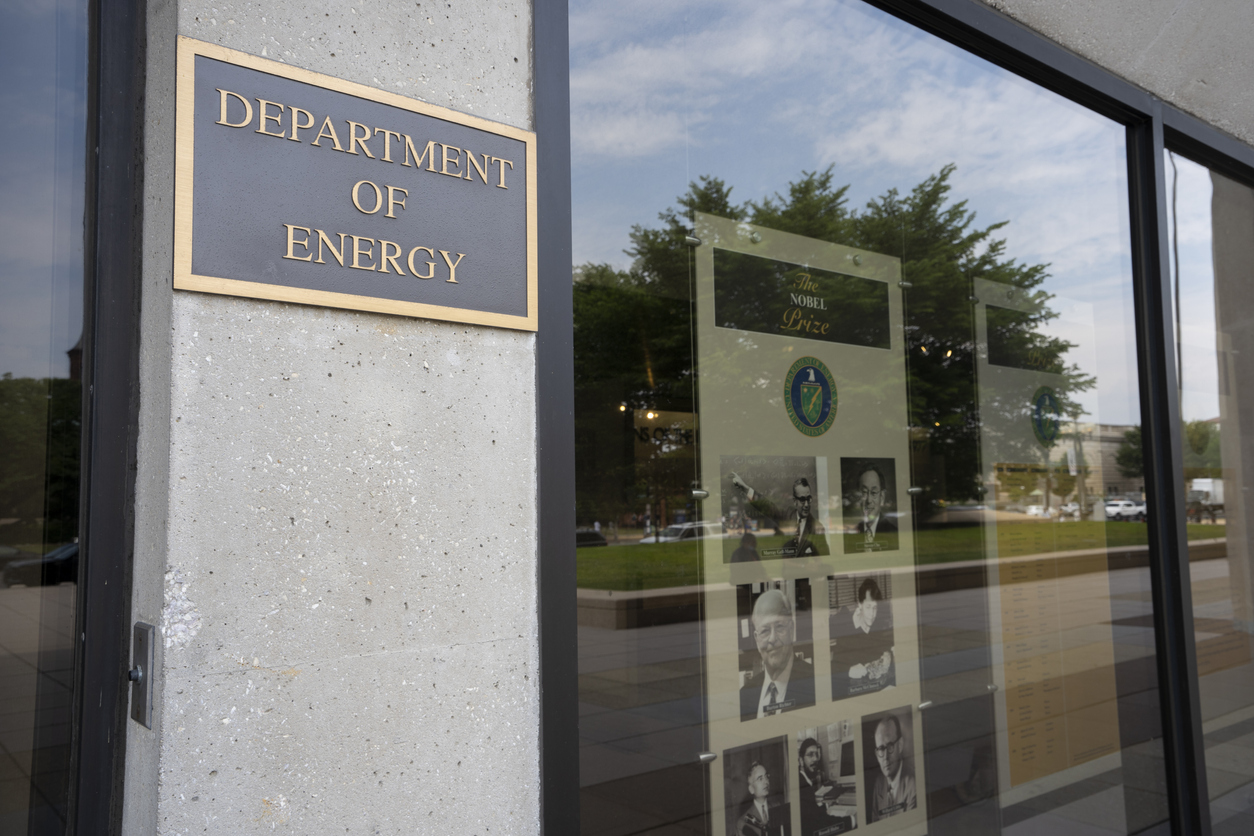
Through the newly passed One Big Beautiful Bill Act (OBBBA), Congress has allocated $1 billion to the Department of Energy (DOE) for loans that focus on the president’s energy dominance agenda. This presents an opportunity for a necessary policy course correction, as the nation’s energy needs are growing, and even the energy we can produce won’t always be low-cost.
During the Biden administration, concern was focused around what energy types were politically preferable over outcomes. To achieve President Trump’s policy goals, however, an emphasis on energy innovation will be required, which will enable us to unlock more energy resources than just what we can get to market today. Now is the ideal time for the Trump administration to look to the future and finally return the DOE to its core mission of energy security and innovation.
Energy is an essential input to economic activity, and while energy policy often focuses on immediate needs or objectives, long-term economic prosperity and energy abundance are inextricably linked. For a poignant visual example, see Our World in Data’s chart of energy sources by type, which dates back to 1800. As more modern sources of energy have become accessible, the globe’s energy consumption, along with commensurate economic activity, has massively improved. However, while the data and economic theory would indicate that our energy innovation policy should be geared towards abundance, that was not the approach taken by the Biden administration.
Under Biden, at least, energy policy—including innovation—was almost explicitly focused on renewable energy as an end goal for a low-cost, secure energy supply. While this may sound nice, careful assessment reveals some key problems with the technological tribalism of his administration.
Firstly, renewable energy is not perfectly substitutable with fossil fuels, and we still rely on legacy fuels for much of electricity generation and transportation. Additionally, renewable energy often relies on Chinese suppliers, which creates security vulnerabilities. Lastly, the Biden administration’s failure to appreciate the role of markets in energy consumption led to elevated energy costs despite a renewable-heavy policy focus. Biden’s preference for concentrating our proverbial energy eggs in one basket was a bad idea and is at odds with conventional understanding of how energy innovation should be supported.
The pragmatic policy approach to energy security, originally envisioned during the oil crises of the 1970s, is that it is not enough to simply expand the production of present-day resources; we also need a plan to utilize energy sources that are not available today. This is the core mission of the DOE, and one of the reasons the nation’s 17 national laboratories—among other innovation efforts—are under its jurisdiction. Through an array of efforts, the DOE casts a wide net, working to identify the next big solution to our future energy needs.
The directional drilling technology that led to the shale oil and gas boom and nearly tripled our oil production was one result of the DOE’s efforts. Much of the decline in the costs of renewable energy can be attributed to DOE research. Pending innovations, such as advanced nuclear reactors or fusion power, are also part of DOE efforts. But the key to these innovation successes has been a healthy spoonful of policy humility: Nobody really knows what the nation’s future energy needs are or the best way to fulfill them, so we shouldn’t assume that we already know the best technologies to lean on.
That lesson of humility, though, has not always been followed. Under Obama, the National Labs were directed to support the president’s climate policy objectives over energy security ones. Under Biden, the DOE’s Loan Programs Office (LPO)—ostensibly a resource for jump-starting first-of-a-kind technologies—was turned into a vehicle for granting unneeded subsidies to mature energy technologies, and the DOE’s inspector general at the time raised concerns that loans were granted with conflicts of interest. The Trump administration, by contrast, can correct these missteps by restoring the DOE’s mission to advance energy innovation, regardless of political preference.
Such a task might seem herculean, but it is not. Simply, the DOE needs to utilize the authorities it already has. The first step is to get the DOE’s Office of Technology Transitions (OTT) back in the business of turning our publicly funded applied research into commercialized, profitable technology. DOE data on intellectual property generated by the national labs shows that the productivity of the labs has been in serious decline under the Biden administration. In fact, 2024 had some of the lowest patent generation in 20 years. But the data shows that the first Trump administration’s approach, during which Secretary of Energy Rick Perry heavily emphasized the growth of “technology transfers,” resulted in some of the national labs’ peak intellectual property generation. The Trump administration should bring back this successful focus on commercialization.
And speaking of commercialization, the Technology Commercialization Fund (TCF) ought to once again focus on technologies that are ready to be commercialized, regardless of their type. The purpose of the TCF, which typically represents a small portion of the DOE’s applied research funding, is to enable promising, capital-intensive energy technologies to demonstrate their commercial viability. Under the Biden administration, the TCF was used almost exclusively for clean energy projects. While advancing clean energy might be a noble goal, it is not the purpose of the TCF, which aims to advance any promising energy technology.
Under the Biden model, technologies like directional drilling—which resulted in natural gas significantly reducing CO2 emissions—would never be considered. It is a mistake for both energy security and the environment to narrow the scope of TCF to what the executive finds politically palatable. Today, Trump and Energy Secretary Chris Wright can correct that.
Lastly, the Trump administration should consider bringing long-overdue reforms to LPO. The DOE’s LPO was originally envisioned as a mechanism for risky, first-of-a-kind projects that the private sector was unwilling to finance to be able to leverage the DOE’s engineering expertise to secure loans that would then be guaranteed (and no risk) to the private sector. To avoid the program acting as a subsidy, the estimated value of subsidy from the loan guarantee would be paid by the project.
LPO largely failed in this mission because projects that could secure financing to cover the subsidy were also likely to secure enough financing to cover the project. That means that, as an innovation effort, it was more trouble than it was worth. But as part of the 2009 stimulus bill, and again in 2022 as part of the Inflation Reduction Act, Congress allocated money to LPO to cover the costs of loan guarantee applicants. While this finally got the LPO functioning, the problem was that the projects LPO selected were motivated more by the interests of the politicians managing LPO than by their potential innovations. The last months of the Biden administration were especially egregious, with subsidies going to projects that were just conventional wind and solar facilities.
Simply, the LPO ought to be a more competitive program where meritorious-but-risky energy projects can still get a chance at commercialization (and not just low-risk innovations that easily secure private financing). For all LPO’s existence, it has been a political football, but with the OBBBA’s recent funding for new loan guarantees, now is an especially good time to reform the program to fulfill its original innovation mission.
Ultimately, the long-term energy prosperity of the United States hinges not just on our current energy production but on continuing the long-held energy innovation agenda that has successfully kept energy abundant and affordable over the long term. The first Trump administration was arguably more successful in metrics of DOE innovation than both the Obama and Biden administrations, and it should waste no time in restoring the functionality of the DOE to pursue its innovation tasks.
The views and opinions expressed are those of the author’s and do not necessarily reflect the official policy or position of C3.