The meetings have started to resemble one another. Different towns. Same fluorescent lighting. Same folding chairs. Same rising suspicion that something unnatural is siphoning power from decent people.
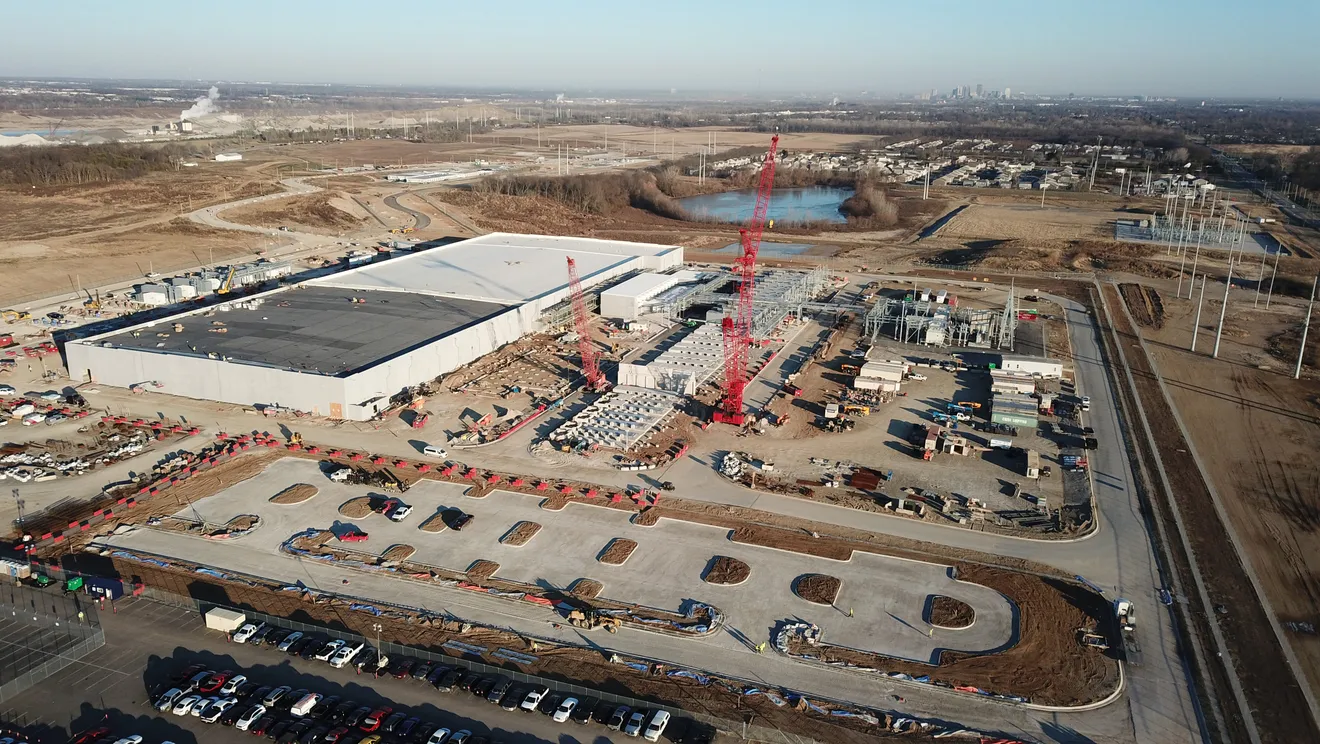
In county chambers from rural Virginia to San Marcos, Texas, residents warn that data centers are “gobbling up” electricity and driving up bills. In Indiana, officials debate moratoria to keep hyperscale campuses from landing near cornfields. The language is strikingly consistent: data centers are “vampires.” They are “stealing” energy. They are feeding chatbots while ordinary ratepayers foot the bill.
In Tallahassee, Ron DeSantis put it plainly: “I don’t think there’s very many people that want to have higher energy bills just so some chatbot can corrupt some 13-year-old kid online. That is not what anybody is signing up for.” The framing is revealing. The issue is not simply cost. It is moral worth. Between the lines sits a quiet premise: electricity is scarce, and some uses are less deserving of it.
Two decades ago, faced with rising energy prices, much of rural America reached for a different reflex: Drill, baby, drill. The slogan was crude, but its instinct was clear. When demand rises, you expand supply. You build.
Now, confronted with rising electricity demand, the instinct in many of those same communities has flipped. Slow it down. Pause it. Stop them.
How did that happen?
Bills rose. Jims got angry. And politicians selected the most expedient target…one that is neither themselves nor the grid they regulate. It is easier to blame chatbots and Silicon Valley than to admit that decades of policy have constrained supply and made scarcity feel permanent.
It isn’t.
Electricity demand is rising again after more than a decade of relative stagnation. For years, utilities planned around flat forecasts. Suddenly data centers, electrification, and industrial reshoring are pushing projections upward.
To some policymakers, that feels like crisis.
But rising demand is not new. It is the recurring feature of every transformative industry.
In 1973, when OPEC’s oil embargo sent prices soaring and gas lines stretching for blocks, the prevailing wisdom was that America had entered a permanent age of scarcity. President Nixon imposed price controls. Congress created the Strategic Petroleum Reserve. Politicians preached conservation. Domestic production was treated as marginal.
Yet between 2008 and 2018, U.S. crude oil production more than doubled—from roughly 5 million barrels per day to over 12 million—driven largely by private innovation in horizontal drilling and hydraulic fracturing. By 2019, the United States was the world’s largest producer of petroleum and natural gas. Scarcity had not been geological. It had been technological and regulatory.
The same panic greeted the commercial internet. In the late 1990s and early 2000s, bandwidth constraints were treated as looming bottlenecks. During the net neutrality battles of the 2010s, we were warned that streaming video would overwhelm networks without aggressive federal oversight.
Instead, fiber deployment accelerated. Wireless technology leapt from 3G to 4G to 5G. U.S. internet traffic increased more than twentyfold between 2010 and 2020. Netflix did not collapse the grid. Capacity expanded.
Go back further.
In the late nineteenth century, as whale oil declined and cities swelled, many observers feared a lighting crisis. Electricity generation seemed speculative. Within decades, power plants dotted the country and electric light was common in American homes. What looked like a ceiling was a transition.
The pattern repeats. Demand surges. Prices rise. Panic follows. Politicians promise management. Production expands. The ceiling dissolves. Scarcity often turns out to be lag.
>>>READ: Rubio’s Data Center Diplomacy
Which brings us back to electricity.
Across the United States today, more than 2,000 gigawatts of proposed generation are sitting in interconnection queues—solar, gas, storage, nuclear—awaiting studies, approvals, and transmission upgrades. The entire existing U.S. power fleet is just over 1,200 gigawatts.
In other words, the country has nearly twice its current capacity waiting in line.
That is not geology. That is governance.
The fight over data centers, then, is not really about servers humming in anonymous warehouses. It is about whether rising demand should trigger new capacity… or a new referee.
Artificial intelligence sits at the center of this debate because it magnifies both load growth and cultural resentment. The image is easy to dislike: deepfakes, essay bots, algorithmic feeds engineered to keep teenagers scrolling at 2 a.m.
But the same computational infrastructure now treated as indulgent underwrites pharmaceutical research, logistics optimization, grid management software, advanced manufacturing simulations, and medical diagnostics.
Right now, AI systems are flagging tiny abnormalities on mammograms that even experienced radiologists can miss—catching cancers earlier, reducing false alarms, giving patients options they would not have had a decade ago. Machine-learning models are narrowing thousands of drug candidates down to a handful worth testing, compressing timelines that once stretched for years. The difference is measured in earlier diagnoses and lives extended.
Those breakthroughs are not powered by moral sentiment. They are powered by electricity.
If we are going to rank the moral worth of electrons, the exercise becomes awkward quickly. It is difficult to argue that streaming Love is Blind through the night or cooling a third garage bay carries higher moral urgency than earlier cancer detection or faster drug discovery.
And once electricity becomes a hierarchy of virtue, you may not like where you rank. That reality is a very different country from the one we inherited.
Over the past two decades, we have been trained either by politics, by media, or by endless crisis rhetoric, to think in fixed pies. When demand rises, we are told someone must be taking more than their share. The industries capable of expanding supply — engineers, industrialists, investors, technologists — are cast as villains before they break ground. In other eras, they won wars, electrified cities, doubled oil output, and built the networks on which modern abundance rests. Today, they are more likely to be hauled before a hearing than celebrated for production. The instinct to increase capacity has given way to the instinct to referee.
This reflex is bipartisan. On the right, suspicion falls on coastal tech elites siphoning power from “real Americans.” On the left, suspicion falls on corporate excess and environmental harm. The villains change. The instinct does not: pause it, slow it, regulate it, ration it.
>>>READ: Could Enhanced Geothermal Systems Help Solve Our Data Center Power Problem?
It is easier to chant than to build. It is easier to promise protection than to unlock capacity.
Only a wealthy society can afford to sneer at its own engines of abundance… and to do so from behind the keyboards they made possible, on networks they financed, using electricity generated by systems they helped scale.
But, when confidence in builders erodes, the gatekeepers lurch forward.
It begins quietly. A pause. A moratorium. A promise to protect families from footing the bill for someone else’s servers. It is dressed up as prudence and sold as protection.
In truth, it is permission.
Permission for someone else to decide which electrons are righteous and which are waste.
Once you decide the pie cannot grow, someone must divide it. That authority does not remain abstract. It searches for villains. It assigns virtue. It declares some uses essential and others indulgent.
Today the villain is a windowless warehouse filled with blinking machines, funded by hoodied technologists who taught our children to stare at glowing rectangles and now promise to automate their future. It does not win applause in a church basement.
Jim—the pipefitter in that basement, once quick with a “Drill, baby, drill”—does not think he is asking for a referee. He thinks he is defending markets against coastal elites. He thinks he is shielding his family from corporate excess. He does not notice the pivot from build more… to stop them.
That is the turn.
We used to respond to rising demand by building. Dams. Pipelines. Grids. Factories. Not because demand was pure, but because capacity is better than a purity test. No one chose the size of your slice but you.
Now the instinct is smaller. Instead of expanding supply, we narrow permission. Instead of building more, we decide who deserves less.
One path builds capacity.
The other builds a gate.
Marc Oestreich is a founding partner of the nonprofit consulting firm Crane + Grey, editor of the energy newsletter GridBrief, and founder of The American Capacity Project.
The views and opinions expressed are those of the author’s and do not necessarily reflect the official policy or position of C3.