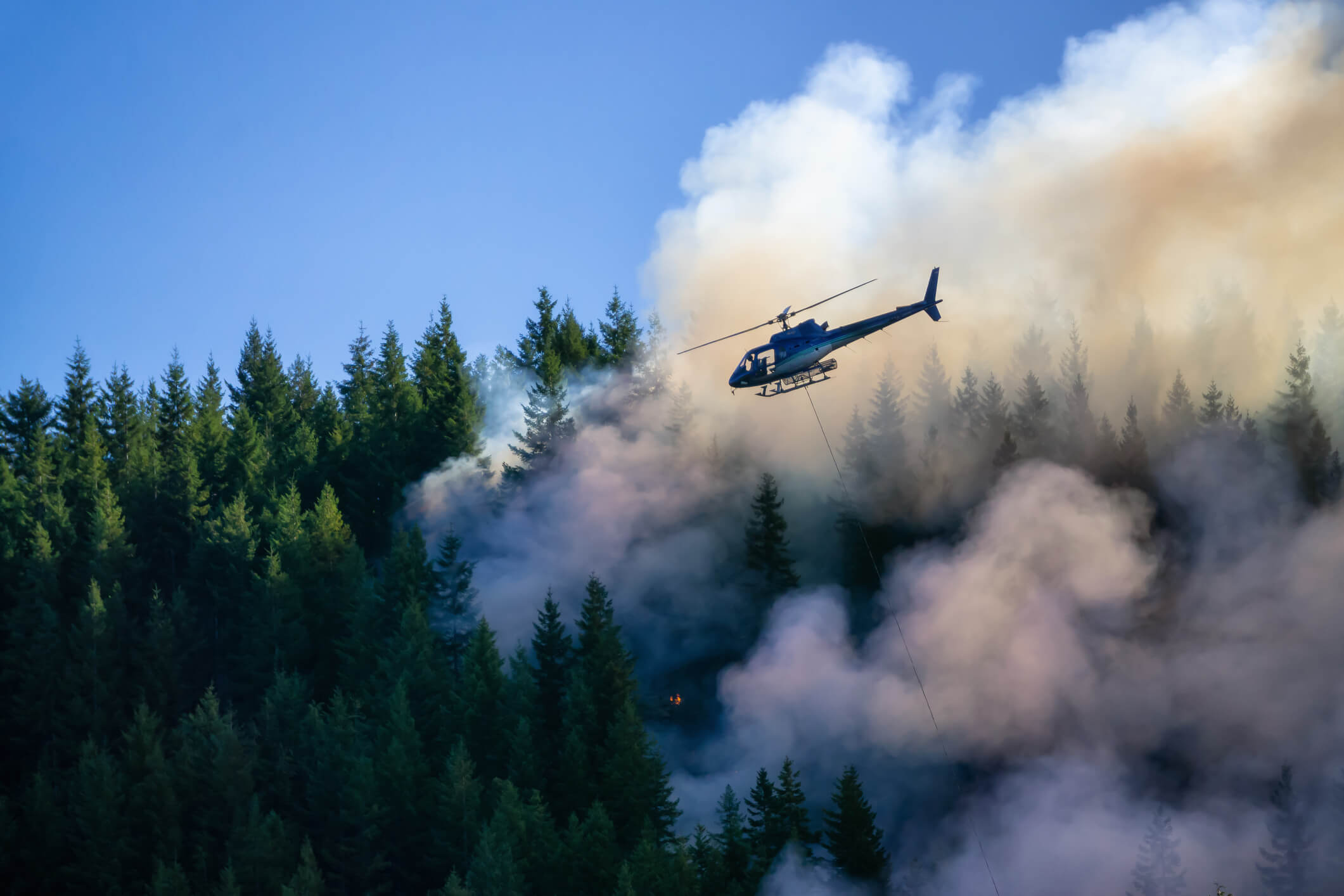
Ringing in the new year in Washington is often accompanied by the hope that your “fill-in-the-blank” long-stalled policy priority finally makes headway. When it comes to forest management, Congress can’t afford another year of delay. While improving forest health for its own sake is reason enough to act, a recent hearing underscored something often overlooked: forest management is critical to protecting the West’s water and power supply.
Forests encompass far more than just trees. They are home to wildlife and ecosystem services, and are often touted as the lungs of the earth, helping purify the air we breathe. But as House Natural Resources Chairman Bruce Westerman (R-AR) emphasized during the hearing, forests are also the kidneys of the earth, filtering pollutants and safeguarding drinking water. In fact, nearly 50 percent of the nation’s surface water supply originates in forested areas, and some Western cities, including Portland and Aspen, rely on national forests for 90 percent of their drinking water. When forests are mismanaged and wildfires run rampant, America’s water security is put at risk.
Well-managed forests also play a critical role in ensuring the West has water for its agricultural needs. Forest density and tree canopy cover directly influence how snow accumulates and melts in mountain watersheds. Just a few hundred years ago, each forested acre in California held roughly 64 trees. Centuries of mismanagement later, that number is up to 300 per acre. With a higher tree density, more snow is trapped in the tree canopy and often evaporates long before it reaches the forest floor, reducing the amount of water that ends up in streams and aquifers. Over time, this disrupts watershed recharge, leaving less water downstream for farmers, communities, and power generation. It also leaves forests drier and more vulnerable to catastrophic wildfires, creating a negative feedback loop.
These same shortages that stress forests and farms also threaten the power systems the West depends on, leaving families and businesses without dependable energy. Hydropower is the West’s most prolific renewable energy resource, providing up to 30 percent of the power supply in a wet year, particularly in Washington and Oregon. Less water flowing downstream hinders this power supply, leaving communities reliant on this energy source vulnerable. And, since hydropower facilities are often located within forests prone to wildfires, this energy source is at additional risk of being shut down during fire season. Wildfires also routinely damage or destroy transmission lines running through forested areas, cutting off power even when other power sources remain available. What’s more, utility companies often preemptively shut off power out of caution during the high-risk fire season, which coincides with the hottest summer months when consumers are likely to need to run their AC to stay cool, leaving those most vulnerable at risk.
>>>READ: PERC Maps Wildfire Risk for Policymakers
It’s clear that forest management is not just a forestry issue– it’s a food, water, public health, and energy security issue as well. Over 1 billion acres of land across the country are at risk of fire, with more than 100 million acres considered high risk due to years of mismanagement. Fire was once allowed to play a restorative role, clearing underbrush and enriching soil, but federal policy in the early 1900s shifted towards aggressive suppression. Under the Forest Service’s 10 am rule, all fire, even beneficial fire, was to be extinguished by 10 am the following day. This suppression-first mentality erased the mark of effective forest management and stewardship practiced by Indigenous communities in the West.
Congress cannot afford another year of delay. Forest management and wildfire prevention must be treated as national priorities. So, what exactly can Congress do to change course?
Fix Our Forests Act
The Fix Our Forests Act would help manage forests better by streamlining lengthy environmental reviews for forest management projects. There are countless examples of forest management projects delayed for years by environmental reviews and litigation, only for the same forests to burn catastrophically before work could begin. FOFA aims to fix that. It expands Good Neighbor Authority, allowing state agencies to carry out management projects– prescribed burns and mechanical thinning– on federal lands. It also contains provisions to directly address vegetation overgrowth near critical infrastructure, including power lines, safeguarding communities from wildfire-related power outages during the peak fire season. By establishing an interagency Fire Intelligence Center, the bill would ensure that government agencies work together on innovative research and development of firefighting and forest management tools.
>>>READ: Grazing as a Strategic Fire Prevention Solution
Grazing for Wildfire Risk Reduction Act
A commonsense win, the Grazing for Wildfire Risk Reduction Act would require the Secretary of Agriculture to establish a plan that utilizes livestock grazing to prevent wildfires. Targeted grazing offers an ecologically restorative, often more affordable alternative to prescribed burns, chemical treatments, and mechanical thinning.
Wildfire Emissions Prevention Act
Under current law, the Clean Air Act unintentionally penalizes good fire. Smoke from wildfires is exempt from state air quality reporting requirements, yet smoke from prescribed burns is often not, hindering foresters’ ability to manage forests effectively. This bill would exempt good fire from these reporting requirements and encourage states to increase their forest management efforts.
While not a comprehensive list, these bills are welcome solutions to the wildfire crisis the West is facing. Another year of inaction could cost the West its water reliability, energy security, and livelihoods. As the new year begins, forest management is at the top of my wish list, and it should be on every policymaker’s, too.
The views and opinions expressed are those of the author’s and do not necessarily reflect the official policy or position of C3.