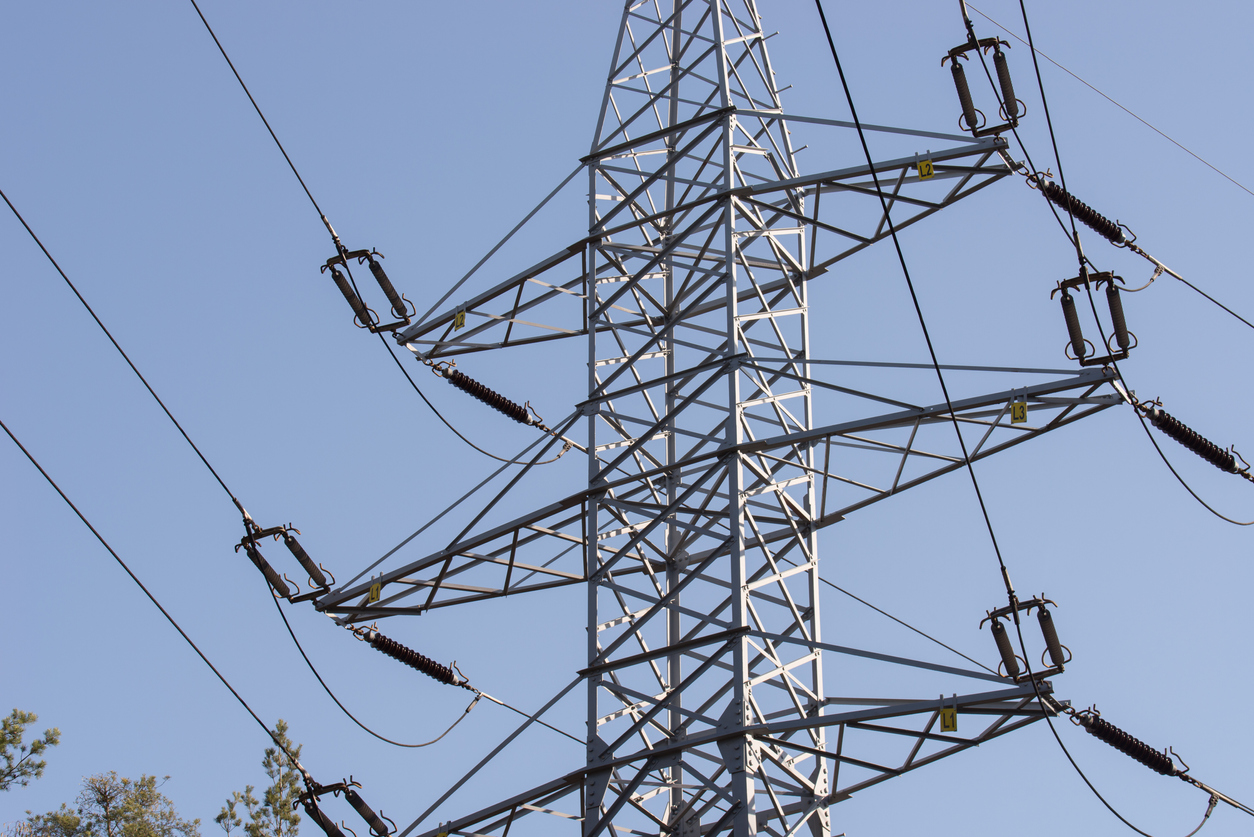
The surge in AI and data centers risks driving up electricity demand faster than we can deploy the power lines needed to carry it. The high-voltage transmission that this expansion, and economic growth more broadly, relies on is slow and expensive to develop, and stuck in an outdated regulatory system that often hands the work to local utilities without competition. New analysis from the R Street Institute shows what this costs us, finding that, when transmission projects are open to competitive bidding, they get built cheaper and faster.
Over a decade ago, the Federal Energy Regulatory Commission (FERC) mandated competitive processes for regional transmission projects that cross multiple utilities’ service territories. But it exempted lines built entirely inside one utility’s own territory, on the logic that urgent repairs and upgrades shouldn’t have to wait for a bidding process. This exemption, however, has given utilities a loophole to avoid competition for high-voltage infrastructure by keeping a project within their borders, developing the lines themselves, and collecting the guaranteed return, while ratepayers lose out on the savings competition would have delivered.
That loophole fundamentally skews the projects that utilities choose to build. Because only regional lines are subject to competition, utilities have reason to favor investing in projects that fall below regional planning thresholds over the larger regional lines that the grid actually needs. High-voltage lines confined to a single utility’s territory cannot move power across grid boundaries when the system is stressed, limiting resilience and access to lower-cost generation from elsewhere. The result is a fragmented and locally constrained transmission system, with higher costs ultimately borne by everyday Americans. Ratepayer advocates and industrial customers have been pushing to close this gap for years.
Utility companies across the Midwest and Southeast recently argued that competitive bidding slows transmission development by one to two years. Their study criticized the procedural steps of competitive bidding, but overlooked that many regulated regions already exempt the most time‑sensitive reliability projects from those requirements. One directly affected grid operator said the complaint overstated how much solicitations actually delay projects in practice. To be sure, poorly designed bidding can add front‑end time, but that is a fixable, process-related problem, not a reason to block competition altogether.
R Street tested these delay claims using project data representative of development across the U.S., counting the full planning and solicitation period, and comparing how long it takes for projects to come online under competitive bidding versus incumbent utility development. The data showed that competitive transmission lines get built both faster and cheaper. In four of five regions assessed, competitive projects became operational earlier, on average, than those developed by incumbent utilities. The study also found that competitive bids provided roughly 30 percent cost savings relative to traditional development.
>>>READ: A Consumer-First Framework for Transmission Reform
Injecting more competition into the grid’s development is a common-sense step toward building a more efficient and affordable system. It works because it aligns incentives. Developers who win projects through bidding typically agree up front to cost caps and late-delivery penalties, so they eat the cost of overruns and delays themselves. Incumbent utilities, the regulated monopolies that own the grid, do not face the same discipline. They recover their spending through rate increases approved by regulators and earn a guaranteed rate of return on the capital they build and own. The result is much weaker incentives to limit overruns and delays.
One straightforward way to shrink the loophole would be a rulemaking from FERC requiring regional planning, and thus competitive bidding, for all transmission lines exceeding 100 kilovolts (kV), a widely accepted threshold for bulk power transmission, while maintaining discretion to waive requirements when appropriate. This addresses the core definitional flaw in the current framework: qualification for the local exemption is drawn on geography alone, even though the value of high-voltage infrastructure stretches beyond a single utility’s service boundary. Combined with FERC’s recent work to modernize long-term transmission planning, this approach could help ensure utilities can no longer dodge cost and timeline pressures on transmission projects just by making them local.
However, a strict voltage threshold does require careful implementation for specific classes of transmission infrastructure. A utility trade association has argued that requiring regional planning could slow connection of power plants and large energy users to the grid. With interconnection already a major bottleneck, FERC should ensure that any new requirement optimizes interconnection rather than adding to the backlog.
>>>READ: A Consumer-First Grid Needs Competition, Not Just More Wires
New transmission will be essential to energy affordability and reliability, and who builds these lines matters too. So far, the local project loophole has meant that only a small share of transmission projects have faced competition. Closing it is one way FERC can lower costs, speed construction, and ensure the grid gets built in the public interest.
The views and opinions expressed are those of the author’s and do not necessarily reflect the official policy or position of C3.