In the future, expect the private sector to continue developing sustainable methods to increase food production around the world.

In the future, expect the private sector to continue developing sustainable methods to increase food production around the world.
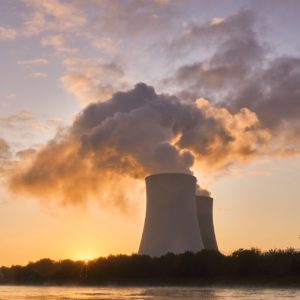
"The Department of Energy yesterday announced the awarding of $22.1 million to 10 industry-led nuclear projects, including two aimed at expanding clean hydrogen production and one at advancing a microreactor design. Other projects selected for funding are focused on addressing nuclear regulatory hurdles, improving existing reactor operation, and facilitating new advanced reactor developments."
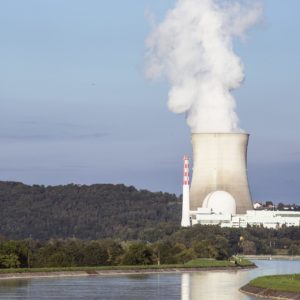
"The GLCH’s application details a $2 billion plan to create a hydrogen hub to provide Ohio, Michigan, and portions of Pennsylvania and Indiana with clean hydrogen from nuclear power at a competitive cost. According to the announcement, the GLCH plan has a well-defined scope, is commercially feasible, and will utilize proven production technologies to minimize the time required to achieve full production of 100-plus metric tons of hydrogen per day."

"She added that since launching, Mycocycle has treated 12,000 pounds of material via paid pilots, as well as with building owners and contractors like META and Lendlease who are focused on reduction of Scope 3 emissions and innovations within their industries."

"Geothermal energy from coal mines can be used not only to heat homes and buildings, but also to cool them. That opens up many more opportunities, especially for data centers. They are some of the worst carbon offenders, using vast amounts of energy and requiring thousands of gallons of water to cool themselves. Now, researchers in Scotland are studying how hot air from data centers can be pumped into coal mines and then recovered from the water to heat other buildings."

The AP300 is Westinghouse’s latest addition to its vast portfolio of reactor technology
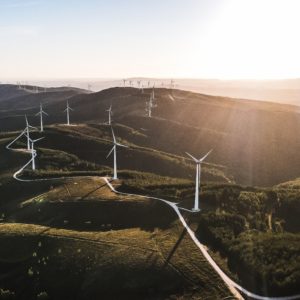
"After six days of catalysis in the laboratory, a piece of a wind turbine blade was dissolved into intact glass fibers and bisphenol A, which can be used in the production of new blades – in addition to a fraction of various oligomers, which cannot be recycled. The metal piece was cast into the wing as part of the wind turbine’s lightning protection."
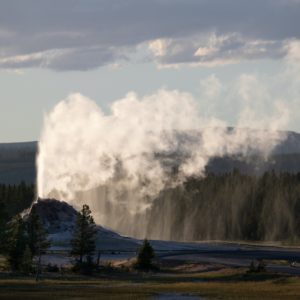
"For a long time, people have been gathering that heat and using it to warm nearby buildings or turn turbines that generate electricity. Iceland gets about two-thirds of its energy—and nearly 100 percent of its heat—from geothermal sources. The city of Boise, Idaho, uses geothermal to warm some downtown buildings, and it has for more than a century."

With two hydrogen coalitions in place, the Midwest is in a great position to lead the nation and potentially the world in developing this clean energy source.

"Startup Lithos Carbon, however, is focusing on the land, and a natural tool: basalt, a black igneous rock that’s common on volcanically active islands like Hawaii and Iceland. Lithos recycles existing basalt dust—a quarrying by-product—and spreads it over crop land. When rainwater mixes with the basalt dust, it triggers a chemical reaction that captures and locks up CO2 as bicarbonate."