"Hydrogen’s flexibility as an energy source — it can be used to cut carbon emissions, power vehicles and store or make electricity — makes it highly compelling. Currently, most industrial hydrogen is made by splitting it from natural gas with steam, a process that emits carbon dioxide. A new industry for carbon-free 'green' hydrogen, using electrolysis to extract the element from water with electricity, is promising but a more costly option. Geologic hydrogen’s advocates think it will prove to be the cheapest form, given the ability to leverage long-established energy-drilling techniques."
Welding method drastically cuts time to make mini nuclear reactors
"The technique is already being used in the automotive and aerospace industries to produce smaller, relatively low-value components. Forgemasters is the first to use the welding technology to build a full-scale SMR pressure vessel, which weighs about 57 tonnes, has a diameter of three metres and walls with a thickness of 200 millimetres."
The U.S. Continues to Invest in Carbon Capture
Private-public partnerships have the potential to transition carbon capture from a relatively nascent technology with promise, to an impactful, market-ready climate solution.
Meet the Startup Stripping Old Planes for EV Parts
"One of the reasons casings are such a key focus is because securing secondary materials at high quality is a key challenge for the EV market. If you look at all the aircraft that are going to be retired between now and 2030-2035, there’s over 50 million battery casings for EVs that could be made."
How AI is Helping Nations Balance Their Power Grids
AI-optimized systems will be crucial in ensuring a smooth and effective green energy addition.
Scientists just set a nuclear fusion record in a step toward unleashing the limitless, clean energy source
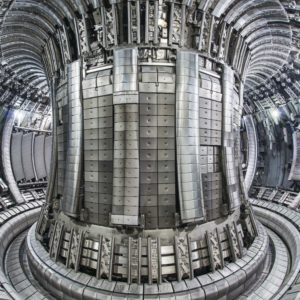
"The experiment is the last of its kind for JET, which has operated for more than 40 years. Its last experiment — and new record — is promising news for newer fusion projects, said Ambrogio Fasoli, CEO of EUROfusion, the consortium of 300 experts behind the experiment. He pointed to ITER, the world’s biggest tokamak being built in southern France, and DEMO, a machine planned to follow ITER with the aim of producing a higher amount of energy, like a fusion plant prototype."
How new magnets could accelerate climate action
"Rowntree and his colleagues see iron nitride as part of the solution to the anticipated problem of constraints in the supply of rare earth metals. Iron nitride magnets don’t use those metals, and they don’t require cobalt, another metal sometimes used in magnets (and in lithium-ion batteries) that’s under growing scrutiny because of the environmental and humanitarian issues often associated with its mining. And some experts say these iron-based materials might end up creating magnets just as strong as those that include rare earth metals."
The U.S. Military Looks to Geothermal for Secure, Firm Power
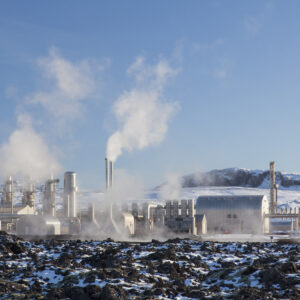
"Unlike wind turbines or solar arrays, electricity production from geothermal doesn’t rely on weather conditions, making it extremely reliable. And for this reason, the U.S. military is showing more interest in geothermal technologies to harden its facilities against power grid outages and cyber-attacks."
Clean hydrogen is driving the next Gulf Coast energy boom
"Over in southern Mississippi, Hy Stor’s vision operates on a similarly grand scale. The company, with just a dozen full-time employees, has acquired rights to nearly 70,000 acres across several counties in a state with almost no renewable power installed today. In just the first phase, Hy Stor will add around 2.7 gigawatts of electrolyzers, powered by twice that capacity of onshore wind, solar and geothermal. This off-grid design ensures that the hydrogen will be clean, a commitment that attracts customers who are serious about decarbonization, CEO Laura Luce told me."
This Georgia refinery is making low-carbon jet fuel from alcohol
"The ribbon-cutting event drew attendance from U.S. Agriculture Secretary Tom Vilsack and Department of Energy officials, as well as the company’s top financial backers. The Microsoft Climate Innovation Fund invested $50 million and Bill Gates’ Breakthrough Energy awarded a $50 million grant, both in 2022, to support construction of the first-of-a-kind facility."