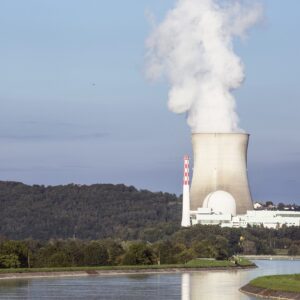
"With the NRC’s approval of GNF’s fuel fabrication license amendment, the company’s manufacturing facility in Wilmington, N.C., becomes the first commercial facility in the United States to hold a license to fabricate fuel containing up to 8 percent U-235, according to GE Vernova. The NRC has issued a certificate of compliance allowing GNF to ship fuel bundles using the company’s RAJ-II shipping container. The agency has also approved licensing topical reports for advanced nuclear methods that will permit GNF to analyze fuel with enrichments above the 5 percent U-235 limit for conventional low-enriched uranium (LEU) fuel."
AI Data Centers Need So Much Power They May Need Built-In Nuclear Reactors
"For years, scientists have been developing small modular reactors (SMR), which are scaled-down power plants that can provide power in situ and thereby dramatically reduce companies' dependence on the grid."
In India, battery swapping fuels electric market for 2 and 3 wheels
"Battery swapping in India has taken off in the past five years through a confluence of technological advances and social and economic forces. Batteries have improved as their costs have fallen dramatically. Meanwhile, India has furiously built digital infrastructure and Indians have snapped up smart phones, allowing even some of the lowest-income people to tap into digital networks."
Bill Gates-Backed Clean Fuel Startup Raises $246 Million To Aid Plans To Drill For Hydrogen
"Hydrogen’s flexibility as an energy source — it can be used to cut carbon emissions, power vehicles and store or make electricity — makes it highly compelling. Currently, most industrial hydrogen is made by splitting it from natural gas with steam, a process that emits carbon dioxide. A new industry for carbon-free 'green' hydrogen, using electrolysis to extract the element from water with electricity, is promising but a more costly option. Geologic hydrogen’s advocates think it will prove to be the cheapest form, given the ability to leverage long-established energy-drilling techniques."
Welding method drastically cuts time to make mini nuclear reactors
"The technique is already being used in the automotive and aerospace industries to produce smaller, relatively low-value components. Forgemasters is the first to use the welding technology to build a full-scale SMR pressure vessel, which weighs about 57 tonnes, has a diameter of three metres and walls with a thickness of 200 millimetres."
The U.S. Continues to Invest in Carbon Capture
Private-public partnerships have the potential to transition carbon capture from a relatively nascent technology with promise, to an impactful, market-ready climate solution.
Meet the Startup Stripping Old Planes for EV Parts
"One of the reasons casings are such a key focus is because securing secondary materials at high quality is a key challenge for the EV market. If you look at all the aircraft that are going to be retired between now and 2030-2035, there’s over 50 million battery casings for EVs that could be made."
How AI is Helping Nations Balance Their Power Grids
AI-optimized systems will be crucial in ensuring a smooth and effective green energy addition.
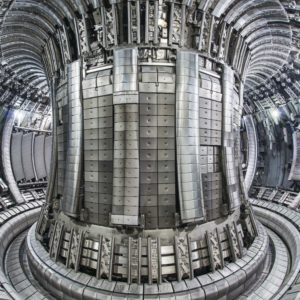
Scientists just set a nuclear fusion record in a step toward unleashing the limitless, clean energy source
"The experiment is the last of its kind for JET, which has operated for more than 40 years. Its last experiment — and new record — is promising news for newer fusion projects, said Ambrogio Fasoli, CEO of EUROfusion, the consortium of 300 experts behind the experiment. He pointed to ITER, the world’s biggest tokamak being built in southern France, and DEMO, a machine planned to follow ITER with the aim of producing a higher amount of energy, like a fusion plant prototype."
How new magnets could accelerate climate action
"Rowntree and his colleagues see iron nitride as part of the solution to the anticipated problem of constraints in the supply of rare earth metals. Iron nitride magnets don’t use those metals, and they don’t require cobalt, another metal sometimes used in magnets (and in lithium-ion batteries) that’s under growing scrutiny because of the environmental and humanitarian issues often associated with its mining. And some experts say these iron-based materials might end up creating magnets just as strong as those that include rare earth metals."