“Conventional air-conditioning (AC) is the most common technology used for cooling and represents a considerable share of energy demand in warmer regions. An alternative that is not frequently considered, is seawater air-conditioning (SWAC)—a renewable alternative for cooling that involves pumping seawater from ocean depths of around 700 to 1200 meters and temperatures of 3°C to 5°C to the coast, where it exchanges heat with a district cooling system, and returns the warmer water to the ocean.”

Increased Buzz Around Advanced Reactors Signals More Momentum for Carbon-Free Energy
“The momentum for new reactors is growing as the technology receives government support and is maturing because of the hard work of developers. I’m glad there is now more widespread recognition for the carbon-free applications new reactors bring to electricity generation and beyond. These new developments will lead to a diverse portfolio of advanced reactors that are positioned to meet needs: for new customers, new markets and the climate.”
Colorado cement plant aims to be first in U.S. to capture carbon on a commercial scale
“LafargeHolcim, a global building materials supplier, has received a $1.5 million grant from the U.S. Department of Energy to research and develop a system to capture and sequester the plant’s carbon dioxide emissions.”
How a Simple Tech Platform Allows People Better Energy Choices
"Arcadia makes it easy for Americans to generate market-based clean energy growth. In a season where there is demand for increased government energy intervention, this tech platform is setting a better path forward through the basic principles of supply and demand."
Trump administration gives $160M to two companies seeking nuclear breakthrough
“The announcement is a significant step toward proving that small nuclear reactors, an emissions-free technology of a type that has never been deployed, can play a role in decarbonizing the grid.”
Scientists engineered plastic-eating ‘super-enzymes’ that can break down bottles in days
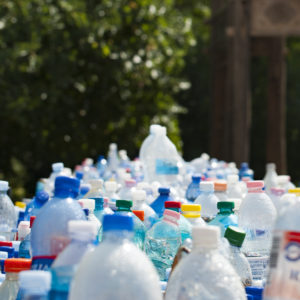
“These 'super-enzymes' were made by researchers at the Center for Enzyme Innovation in the UK and the National Renewable Energy Laboratory in Colorado. They break down a type of common plastic known as polyethylene terephthalate (PET) — used in single-use bottles as well as clothing and carpets — into its chemical building blocks.”
To Reduce Carbon Emissions, We Need to Support Innovation
“Luckily, there is abundant innovation happening in nuclear energy and across the carbon-free energy sector. We must continue to see policy support and investment demonstrated by initiatives like DOE’s Advanced Reactor Development Program.”
GM’s Detroit-Hamtramck Auto Plant Is Now ‘Factory Zero’
“Factory Zero will be over 4 million square feet in size when it resumes operation, making it among GM’s largest. When it gets up to its full rated capacity of 270,000 vehicles annually, it is expected to employ about 2,200 people.”
Hydropower 101
"After peaking in the 1960s, the stream of hydropower development gradually slowed to a trickle. One of the main reasons is the bureaucratic federal licensing process. Developers must navigate a licensing process that can take more than six years, spanning multiple state and federal government agencies."
Equinor and Microsoft collaborate on Northern Lights carbon capture and storage value chain
“’Carbon capture and storage is a proven technology and has the potential to play a key role in decarbonising energy and industries across sectors to meet international climate targets.'"