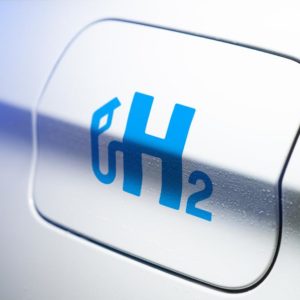
“A few players are tapping into the renewable hydrogen market. One of them being California based, Ways2H, which has developed a technology that converts waste into renewable hydrogen through a zero-carbon process. Wasy2H takes waste, that does not contain metal or glass, anything from medical supplies, wood or even plastic litter, and through a patented thermochemical process (not burning), converts it into a gas, from which it then extracts the hydrogen. And voila, near carbon free hydrogen.”
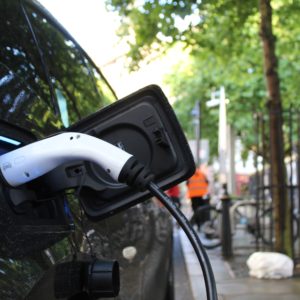
Drop in pandemic carbon dioxide emissions previews world of electric vehicles
“When the San Francisco Bay Area mandated shelter-in-place March 16, it created a natural experiment for UC Berkeley's Ron Cohen, who had established an inexpensive pollution sensor network in local neighborhoods. The sensors showed carbon dioxide emissions plummeting 25 percent in the subsequent six weeks, mostly because of a 48 percent drop in traffic. Networks like this -- soon to be emplaced in Glasgow -- can track greenhouse gases and progress toward lowering them, including the impact of electric vehicles.”
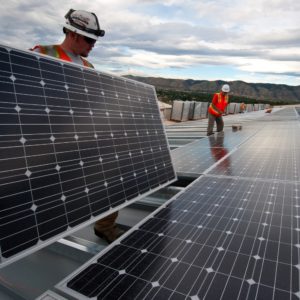
DOE study: This rooftop solar fix could slash CO2
"'A lot of people talk about rooftop solar as, maybe this could be part of the solution for energy justice,’ he said. ‘Whereas now, it's part of the problem. The motivation of this paper is, maybe there are some policies and business models that have begun to alleviate this problem.’"
BMW Jumps Into Electric SUV Race With 2022 iX
“Production of the iX will start in the second half of 2021 with U.S. deliveries starting in early 2022.”
How to unleash agtech in the fight against climate change
“We’re believers that there’s no comprehensive solution to climate change without major changes to the agricultural system. There will be multiple unicorn-level outcomes as companies begin reshaping the $7 trillion food industry while removing gigatons of carbon from the atmosphere. For those startups and investors fortunate enough to remain standing now, the ag industry just got a lot riper for disruption.”
The Combined Power Of Floating Solar On Hydro Reservoirs Shows New Potential
“While floating PV (FPV) is 10%-15% higher in upfront capital costs and per-kilowatt cost compared to conventional PV, FPV used in conjunction with hydropower provides a host of other benefits. These include reduced transmission costs by linking to a common substation, reduced evaporation, reduced algae growth on hydro reservoirs, and increased efficiency of panels due to its water-cooling effect.”
Australia Picks Massive Tesla-Supplied Battery to Ease Transmission Constraint
“The battery is set to come online by November 2021, fulfilling a System Integrity Protection Scheme contract with AEMO through 2032. That grid jargon means that the battery will guarantee instantaneous power in case the transmission network suffers an unexpected outage.”
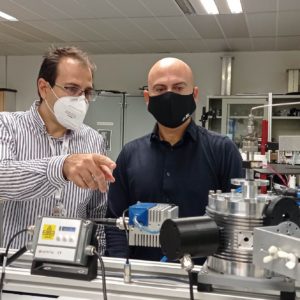
Researchers discover a new way to produce hydrogen using microwaves
“The technology developed and patented by the UPV and CSIC is based on the phenomenon of the microwave reduction of solid materials. This method makes it possible to carry out electrochemical processes directly without requiring electrodes, which simplifies and significantly cheapens its practical use, as it provides more freedom in the design of the structure of the device and choosing the operation conditions, mainly the temperature."
For a Climate-Concerned President and a Hostile Senate, One Technology May Provide Common Ground
"‘If you look at wind, that was the result of a whole bunch of different, really aggressive policy actions,’ said Rich Powell, executive director of ClearPath, a nonprofit that advocates for conservative clean energy policies. He noted that a combination of federal tax breaks and renewable electricity standards at the state level drove down the cost of wind over decades, and that the same has happened for solar over the past 15 years. ‘We're only seeing the beginnings of all those things for carbon capture.’"
How Hydrogen Is and Isn’t the Future of Energy
"The long-term solution to slow global warming is therefore to electrify everything, as long as that electricity comes from renewable sources. Aye, there’s the rub. We simply can’t run everything on electricity.