"If funded and completed, the two carbon-removal hubs would remove roughly 1 million metric tons of carbon dioxide from the atmosphere annually and store it underground. That amount is equivalent to the annual emissions of about 220,000 gasoline-powered cars, which is a fraction of what is needed overall to limit climate change. Each project would be roughly 250 times bigger than the only direct-air capture facility currently in commercial operation."
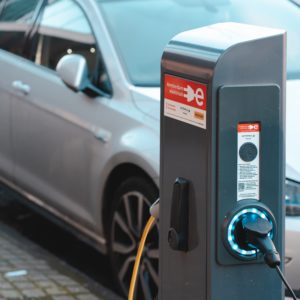
GM, BMW, Other Major Automakers Partner on North American EV Charging Venture
A cohort of some of the world’s leading automakers is teaming up to build a vast network of EV charging stations across North America. The carmakers––General Motors (GM), BMW, Honda, Hyundai, Kia, Mercedes-Benz, and Stellantis––will invest an initial $1 billion to erect thousands of vehicle charging ports along major U.S. and Canadian highways and in...
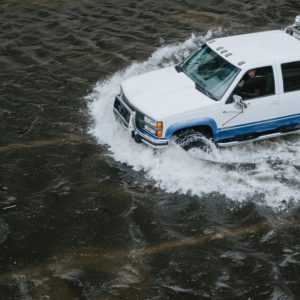
Insured Losses From Natural Catastrophes Set to Top $100 Billion
"Munich Re has put the total global insured costs of natural-catastrophe events in the first half of 2023 at $43 billion, while Swiss Re has pegged it at $50 billion, according to a report by Bloomberg Intelligence."
Plant-Based Plastics Gain Favor as Companies Pursue Sustainability Goals
"Plants absorb the atmosphere’s carbon dioxide, which cuts the greenhouse-gas emissions from making bioplastics to at least half that of fossil-fuel-based plastics. Bioplastics can also sometimes cause less pollution when they degrade in the environment."
Natural Disasters Are Rising. This ETF Stands to Gain From Recovery Efforts.
"The strategy is an equal-weight ETF with 49 stocks, including chip maker Nvidia (NVDA), whose shares have risen more than 200% this year. Chanin said while most investors are focused on the chips and artificial intelligence side of the company, what makes the stock relevant to his ETF is its work with risk simulation."
Coastal Real Estate Can’t Seem to Price Climate Risk
"That study adds to a 2022 paper by Freddie Mac economists that found that Florida homes exposed to rising sea levels commanded no discount over those that aren’t. Another paper published this year estimated that flood-exposed residential properties were overvalued by $121 billion to $237 billion. In its totality, the available evidence suggests that the market has been insufficiently discounting the risk of rising seas because of a shortage of high-quality information — or at least an information assymetry between sellers and buyers — and that the best way to address it is to get the right data in front of people."
This Arkansas Town Could Become the Epicenter of a U.S. Lithium Boom
Collin Eaton and Benoît Morenne of The Wall Street Journal report on Magnolia, Arkansas and its role in the lithium boom. online pharmacy buy proscar no prescription pharmacy online pharmacy buy seroquel online cheap pharmacy “Exxon, which is generally bullish about the future of oil and natural gas, is also preparing for a future less dependent...
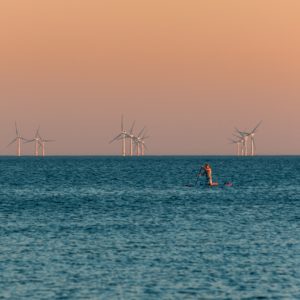
US to hold first offshore wind rights sale in Gulf of Mexico next month
"According to a sale document, companies qualified to bid at the sale include units of European energy companies Equinor (EQNR.OL), Shell (SHEL.L), RWE (RWEG.DE) and TotalEnergies (TTEF.PA), all of which are already developing U.S. offshore wind leases. Equinor and Shell also have major oil and gas operations in the Gulf."
Energy Northwest, X-energy sign joint development agreement for up to 12 small modular reactors
"After conducting extensive evaluations of different advanced small modular reactor technologies, Energy Northwest determined that the Xe-100 was the best fit for its future resource needs. 'The evaluation process found X-energy’s technology possessed the right operational, safety, maintenance, and licensing attributes to meet the northwest region’s current and future need for firm, dispatchable carbon-free energy,' the company said in an e-mail."
Germany’s Irrationality Against Fossil Fuels Has Made It More Dependent on Them
Dr. Barbara Kolm writes in The Daily Signal about Germany’s irrational energy policy. “If the government wanted to truly help the environment, however, it would look to free enterprise to find solutions and use those resources that are abundantly available—for example, hydropower in the Alpine regions or the rivers.” Read the full article here. online...