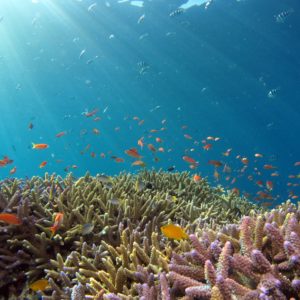
"If the reefs collapsed completely, it would be disastrous for the Florida Keys. According to the Florida Fish and Wildlife Conservation Commission, the reefs in Southeast Florida are valued at $8.5 billion and sustain 70,000 full- and part-time jobs. The barrier reef also protects the Keys from hurricanes and major storms by soaking up wave action."
Articles from Around the Web
Scientists unveil methane munching monster, 100 million times faster than nature
The chlorine atoms then steal hydrogen atoms from methane to make hydrochloric acid (HCl), which can be captured and recycled. The methane atoms decompose into carbon dioxide (CO2), carbon monoxide (CO), and hydrogen (H2), the same way it is processed naturally but at a rate that's roughly 100 million times faster in the reaction chamber."
The Case for Bipartisan Energy Permitting Reform
"During a time when not much is certain on Capitol Hill, it is abundantly clear that bipartisan action is needed to improve energy infrastructure permitting in the U.S. in order to fight climate change and strengthen our economy."
From kicks to compost: Puma’s playbook for circular sneakers
"Footwear production accounts for 1.4 percent of annual global greenhouse gas emissions, according to a 2018 Quantis study — roughly equivalent to the emissions of Canada. Manufacturing accounts for 43 percent of those emissions, and extracting and processing raw materials 34 percent, the report found. Making a pair of sneakers generates 30 pounds of CO2, according to an analysis by MIT in 2013. A typical shoe contains several materials tightly sewn together — leather, plastic, cotton, rubber, synthetics and so on — and is thus very difficult to recycle. Ninety percent of old shoes end up in landfill sites."
The Future of Nuclear Energy Will Be Decided In Idaho
"INL calls itself America’s nuclear energy laboratory, and its core missions include keeping the existing fleet of reactors in service and developing the next generation of fission power plants. A total of 52 reactors were built and operated at the facility as the technology became a mainstream source of electricity. The last new one to go into service there was in 1973, though."
Rising peak demand, 83 GW of planned retirements create blackout risks for most of US: NERC
"A spokesperson for MISO said the grid operator 'concurs with NERC’s key conclusions and recommendations,' and is taking steps to address potential resource shortfalls. A new seasonal resource adequacy construct, changes to resource accreditation, development of a long-range transmission plan and adoption of a reliability-based demand curve will help, they said."
The Next Chips to Transform EVs Could Be Made From Wood
"The cost of producing synthetic graphite from wood using CarbonScape’s technology is competitive with making it from fossil fuels, said Williams, without providing detailed figures. Temperatures required to create graphite from wood chips are lower, and the process takes hours rather than weeks, he said."
NYC removes zoning restrictions for rooftop solar, energy storage and electrification equipment
"The initiative also expands buildings’ rooftop and yard allowances to accommodate the increased need for outdoor electrified equipment such as heat pumps. It changes other rules to ensure a wide range of exterior retrofits and updates 'Zone Green' floor area exemptions to ensure a better-than-code performance. It updates the framework for accessory mechanical equipment, like HVAC units and fire protection systems, to reflect the needs of electric retrofits and other energy infrastructure, by enabling equipment to cover up to 50% of buildings to a height of 15 feet, the proposal says."
Poverty is killing the Amazon rainforest. Treating soil and farmers better can help save what’s left
"The only way to meet both goals is to find more paths for people to make a living in the Amazon without further destroying the rainforest, say experts who have long worked in the region. That means using already deforested land more efficiently — to reduce pressure to clear more forest — as well as supporting businesses that sustainably harvest native products such as açaí and cacao."
Time to Bring Nuclear Energy Into the 21st Century
"There is no question that these proposed reforms are a major departure from the status quo, but they are reasonable, not radical. They would foster good governance and economic progress in the industry. As COP28 representatives discuss how to reduce carbon while raising global living standards, nuclear energy should be on the front burner."