"The statement also commits to the construction of new nuclear power plants and the early deployment of advanced reactors, including small modular reactors worldwide while maintaining the highest levels of safety and security."
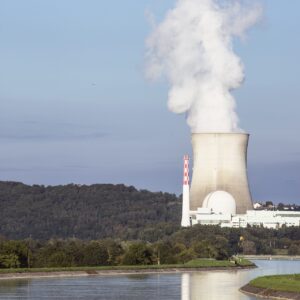
"The statement also commits to the construction of new nuclear power plants and the early deployment of advanced reactors, including small modular reactors worldwide while maintaining the highest levels of safety and security."

"Data centers and AI computing have triggered a historic increase in near-term electricity demand, catching utilities and grid planners by surprise across the country. Some utilities are looking to increase their investment in gas turbines to keep pace with demand, but that approach locks in new carbon emissions for years, if not decades. Google’s Arizona strategy models a different path: bringing dispatchable clean energy online in the places where it’s building the data centers."

"Market revenue for recycling robots is forecast to reach more than $10 billion by 2030, as materials recovery facilities (MRFs) struggle with understaffing and the sheer volume of unique materials — nearly 300 million tons in 2018 for the U.S. alone — that they are expected to process."

"We can all agree that if the climate changes, then most businesses will suffer consequences. But to ask each firm to assess the material impact of climate risks on its 'business strategy, operations, and financial conditions' would require firms to become experts in how and when such risks will manifest. This is beyond the scope of firms to assess and beyond the scope of the SEC to require."

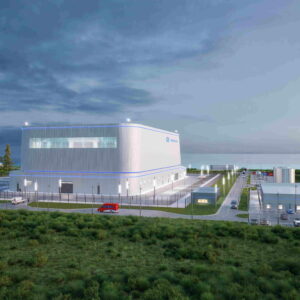
"The Natrium reactor, which has been developed by TerraPower along with GE Hitachi Nuclear Energy, is a bit larger than most SMRs, with a generation capacity of 345 MW. The reactor also includes a molten salt-based energy storage system (ESS). TerraPower has said the ESS could increase the power output to 500 MW for a period of more than five-and-a-half hours if needed."
"'We're keeping a very close eye on it, recognizing there is a very strong alignment and synergies with what we already know how to do.'"

"To date, the US has restricted domestic nuclear fuel recycling due to proliferation concerns, but that could be changing. The Biden administration is more open to ending the moratorium on recycling in light of the potential benefits of recycling fuel, according to an analysis by Physics Today."
"The MOC will supersede earlier bilateral agreements between the entities. These include separate memoranda of understanding (MOU) for cooperation and exchange of information 'in nuclear regulatory matters' between the NRC and the CNSC, signed in March 2023; an MOU between the NRC and the ONR, signed in October 2020, and an MOU between the CNSC and the ONR, signed in October 2020."

"Keurig Dr Pepper said that it would begin beta testing of the new Alta system, which will take the compostable pods, as early as this fall. The company plans to refine the product further before wide release of the Alta."
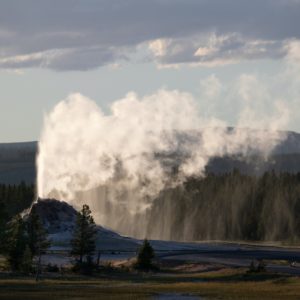
"DOE is the only plausible candidate to fill this role in the United States. It routinely takes significant technical risks in order to create opportunities for private investment. It did so when nuclear power was commercialized in the 1950s, it aided solar and wind from the 1970s on, and it is trying to do so now for carbon capture, hydrogen, and even nuclear fusion. Geothermal energy is a more-than-credible addition to this list."