CARB would force North America's rail network to spend millions of dollars to comply with the regulation, increasing the cost of transporting goods, which would be passed on to consumers.
Articles from Around the Web
Committee to evaluate nuclear power option for Norway
"'The committee shall provide an updated knowledge base on various types of nuclear power technology, technological maturity, assumed time perspective for scale-up and commercial availability, and costs. An account must also be given of relevant investment factors and requirements for infrastructure, including the need for network connection and what requirements must be made for a suitable location.'"
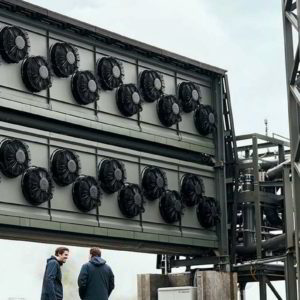
The Carbon Cleanup Industry Is Growing in Louisiana
"The humid climate is also a boon for Heirloom’s technology, which relies on heating limestone to remove CO2, according to Alexa Dennett, Heirloom’s head of marketing and communications. The smaller-scale plant will allow the company to test the kilns it uses as part of its system, Dennett added."
Radical Technology Aims to Rev Up Oceans’ Power to Cool the World
"Vesta said its work in North Carolina will remove about 6,000 metric tons of carbon over several years. Its sand mixture acts like an antacid, boosting water’s alkalinity and its ability to absorb more carbon. The company previously conducted what it said was promising research in the Dominican Republic but decided other sites would be better for initial deployments. It then ran a successful small-scale test in New York."
New technology recycles pollutants into versatile commodities
"'The process produces ammonia from ambient temperature and pressure using wave chemistry and plasma. The integration of the A-Box and WhiteBox enables the desulphurization of energy transition metals like copper and nickel, without the need for water or limestone, and the resulting 'waste stream' from the process is then converted into fertilizer,' he said."
Biden may have a petrol problem
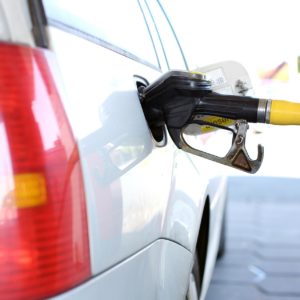
"A further option would be to allow more flexibility in the production and distribution of the different summer grades of petrol. Some in Congress will inevitably urge banning petrol exports, as they have before, but that would be deeply damaging to the credibility of the US as a reliable energy supplier."
Google is using AI to predict floods—and sending cash to people before disaster hits
"GiveDirectly also piloted the idea in Mozambique last year, giving families $225 three or four days before a flood. 'Some families used [the cash] to purchase essential supplies like food and medicine,' Lummis says. 'Some people relocated to safer areas. In some cases, people immediately started to make reinforcements to their homes, building stronger structures. Some people spent the cash immediately after to reinvest in businesses or buy seeds to replant because their crops had been destroyed.'"
Exxon Mobil and Air Liquide agree to support production of low-carbon hydrogen
"Air Liquide, which supplies gases and services to industries, will build and operate four Large Modular Air separation units to supply 9,000 metric tons of oxygen and about 6,500 metric tons of nitrogen every day to the Texas facility to help produce low-carbon hydrogen and ammonia."
How US influence can end harmful fisheries subsidies
"The world needs healthy fish populations, not populations depleted by overfishing. A thriving ocean underpins strong economies and coastal communities not only in the United States but also across the globe."
How heat pumps can turn wasted energy into low-carbon whisky
"Chivas Brothers’ £60 million ($76 million) decarbonization plan is built on the heat-recovery project it launched at Glentauchers in 2021. The facility still relies on fossil-fueled boilers, but its new system has cut the distillery’s total energy usage by 48 percent and energy-related carbon emissions by 53 percent by reducing how much it has to use those boilers, according to the company’s case study."