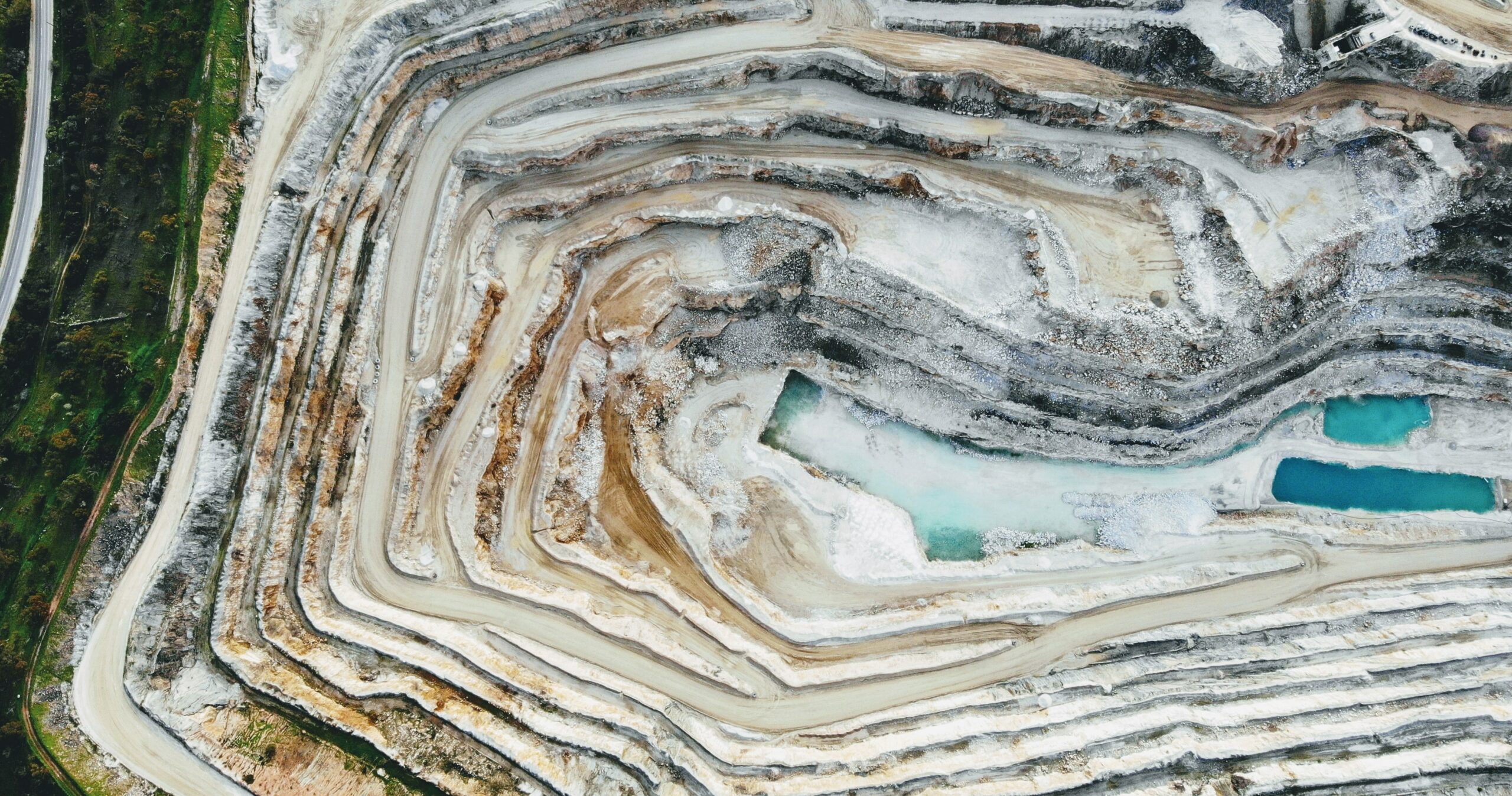
The bold vision for America’s clean energy rests on an extremely fragile foundation. The United States is highly dependent on foreign countries for crucial minerals. In 2024, 80 percent of the minerals the U.S. consumed were imported. Between 2020 and 2023, roughly 70 percent of rare earth imports came from China. This shows that when it comes to supply chains, the U.S. relies mostly on a single strategic competitor to refine and process resources such as nickel, rare earths, graphite, and lithium. This dependence isn’t just an economic liability but also a national security risk. Crucial minerals are vital for U.S. energy infrastructure, defense, power grids, satellites, fighter jets, and various forms of secure communications. A disruption in any of these areas could leave the U.S. vulnerable to being leveraged by foreign countries.
The United States possesses significant resources, but mining is only the first step. The real bottleneck lies in refining and processing raw materials into usable products. Currently, China dominates global refining capacity for many minerals that are crucial worldwide. China controls roughly 60 to 90 percent of the processing for those materials.
This concentration of control and dependency creates a strategic vulnerability for America. Various supply chains can be unexpectedly disrupted by events thousands of miles away. Given any geopolitical event, the U.S. could find itself cut off from crucial materials for both clean energy and national defense.
The irony that is often missed is that this vulnerability for America is mostly self-inflicted. Lengthy permitting processes, litigation risks, and regulatory uncertainty make it extremely difficult to build mines domestically. In America, permitting a new mine can take over a decade. In countries like Australia or Canada, it only takes two to three years. Refining facilities face similar hurdles and are then compounded by political opposition and federal guidelines.
While environmental safeguards take a long time to obtain approval, they shouldn’t be abandoned; rather, they should be improved and made more efficient. Streamlining permitting timelines, allowing parallel reviews, and clarifying agency responsibilities would make a world of difference. Consistency is as important as speed. Companies are far more likely to heavily invest in domestic projects if the process is clear and finite.
>>>READ: The Ukraine Mineral Deal Is a Win for America, Ukraine, and Peace
While domestic production needs to be kick-started, that alone will not solve the problem. Domestic production is vital because it gives the U.S. control over part of the supply chains and minimizes exposure to disruption. Relying on allies certainly helps, but allies are also dependent on Chinese processing and are at the whims of global shortages. As a result, domestic production increases resilience, but it must be grouped with allied sourcing to fully alleviate the risk. The United States should strive for resiliency. The only way to accomplish mineral resilience is to build and maintain connections with trusted allies. Places like Australia, Chile, and Canada have rich resources and share America’s interests. Strategically coordinating with our allies will help reduce our reliance on hostile countries.
The transition to clean energy will not succeed based only on ambition. Solar panels and EVs don’t materialize by policy decree alone. They depend on materials mined and refined somewhere globally. If the U.S. continues to outsource the most vital parts of these supply chains, it will remain exposed to unexpected disruption.
Securing reliable mineral supply chains is not just an economic imperative; it’s a vital piece of national security. With strategic permitting reform and robust partnerships with allies, America can turn the current bottleneck into a strategic advantage. The cost of inaction is dependence; the reward for action is resilience.
The views and opinions expressed are those of the author’s and do not necessarily reflect the official policy or position of C3.