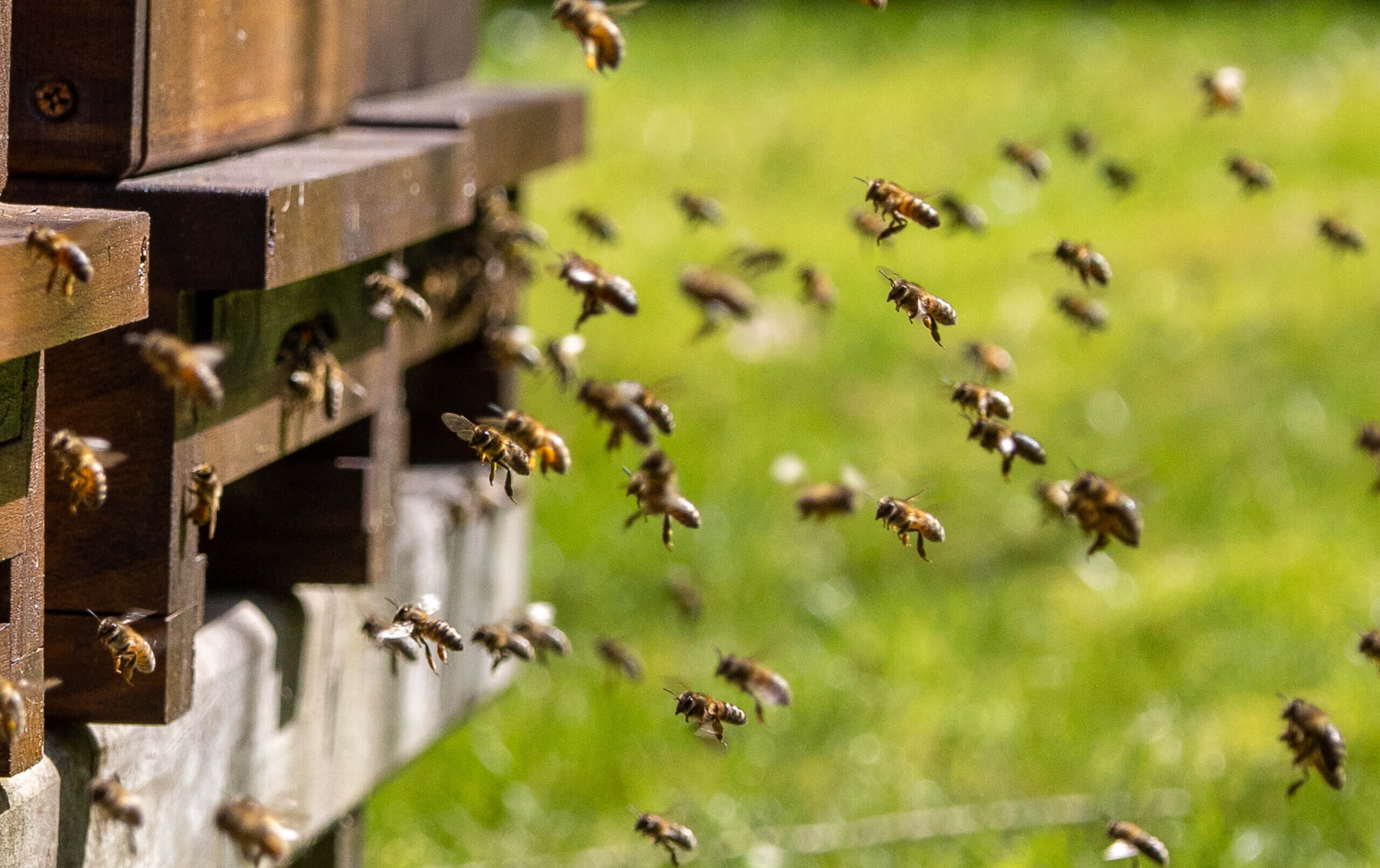
Pollinators such as bees play a vital role in global food production. Nearly three out of four crops consumed by humans worldwide depend on them. According to data from the Food and Agriculture Organization of the United Nations, pollinators support the production of 87 of the world’s leading food crops, influencing 35 percent of global agricultural land.
Bees are among the most important and best-known pollinators on the planet. Despite their small size, these insects play an outsized role in sustaining the global food supply. That’s why AI-powered beehive company Beewise wants to save them.
The company’s signature product is its AI- and robotics-enabled BeeHome. Marketed as a high-tech alternative to traditional wooden beehives, BeeHome is a solar-powered, self-sustaining autonomous beekeeping system that provides remote, round-the-clock care for vulnerable bee colonies. BeeHome’s value proposition lies in its ability to outsource the manual labor traditionally carried out by beekeepers to a computer that can consistently monitor and tend to honey bee colonies on a 24/7 basis. That is, BeeHome not only offers sensors for remote inspection of hives (technology that already exists on the market), but also eliminates the need for human labor by up to 90 percent.
BeeHome achieves this by leveraging cameras and computer vision-AI to optimize environmental conditions inside the hives and detect threats. For example, when a colony is under attack by pests such as Varroa mites––a notorious parasite that has devastated honey bee populations worldwide––BeeHome automatically responds by applying a chemical-free heat treatment that destroys the mites. This process occurs autonomously, using a robotic arm to move affected hive frames––all without the need for human intervention.
>>>READ: The Cleaner Side of American Beef
Beyond pest control, BeeHome also provides automated feeding and continuously regulates hive conditions to safeguard bees from extreme weather. In doing so, BeeHome significantly improves survival rates for bee colonies. According to BeeWise, BeeHome can reduce bee mortality and colony loss by up to 70 percent.
By helping commercial beekeepers manage large numbers of colonies more efficiently, the system saves growers substantial time and money. Now, farmers and beekeepers no longer have to go out into the field to manually maintain their hives, but can instead monitor and manage them from the comfort of their own home through an app on their phone or tablet. This translates into greater honey production, healthier hives, and reduced operational and labor costs, notwithstanding the priceless advantages of keeping nature’s pollinators thriving, which yields countless environmental benefits.
Co-founder of BeeWise, Eliyah Radzyner, explains how the idea for the company emerged during his time working as a commercial beekeeper. Noticing a major gap in the industry, Radzyner decided to take action: “Suddenly it was clear, what we needed was not remote inspection, it was remote beekeeping: “What if we could not only inspect the hives remotely, what if we could actually address the bees’ needs remotely? In real time. Identify a parasitic infestation and treat it in real time before it becomes detrimental. Identify a starving hive that is low on its stores and feed it before it’s too late.”
>>>READ: Why Innovation is Key to Affordable Food
BeeHome does just that, helping farmers who might otherwise miss warning signs intervene to stave off colony loss before it’s too late.
Since its founding in 2018, the Israeli startup has raised $120 million to build robotic hives.
Roughly 40 percent of bees in the United States die each year due to pesticides, diseases, and a changing climate. BeeHome is not just an upgrade to your traditional wooden hive, but a mighty tool designed to help rescue honey bees from climate-related colony collapse and ensure a stable global food supply.
The views and opinions expressed are those of the author’s and do not necessarily reflect the official policy or position of C3.