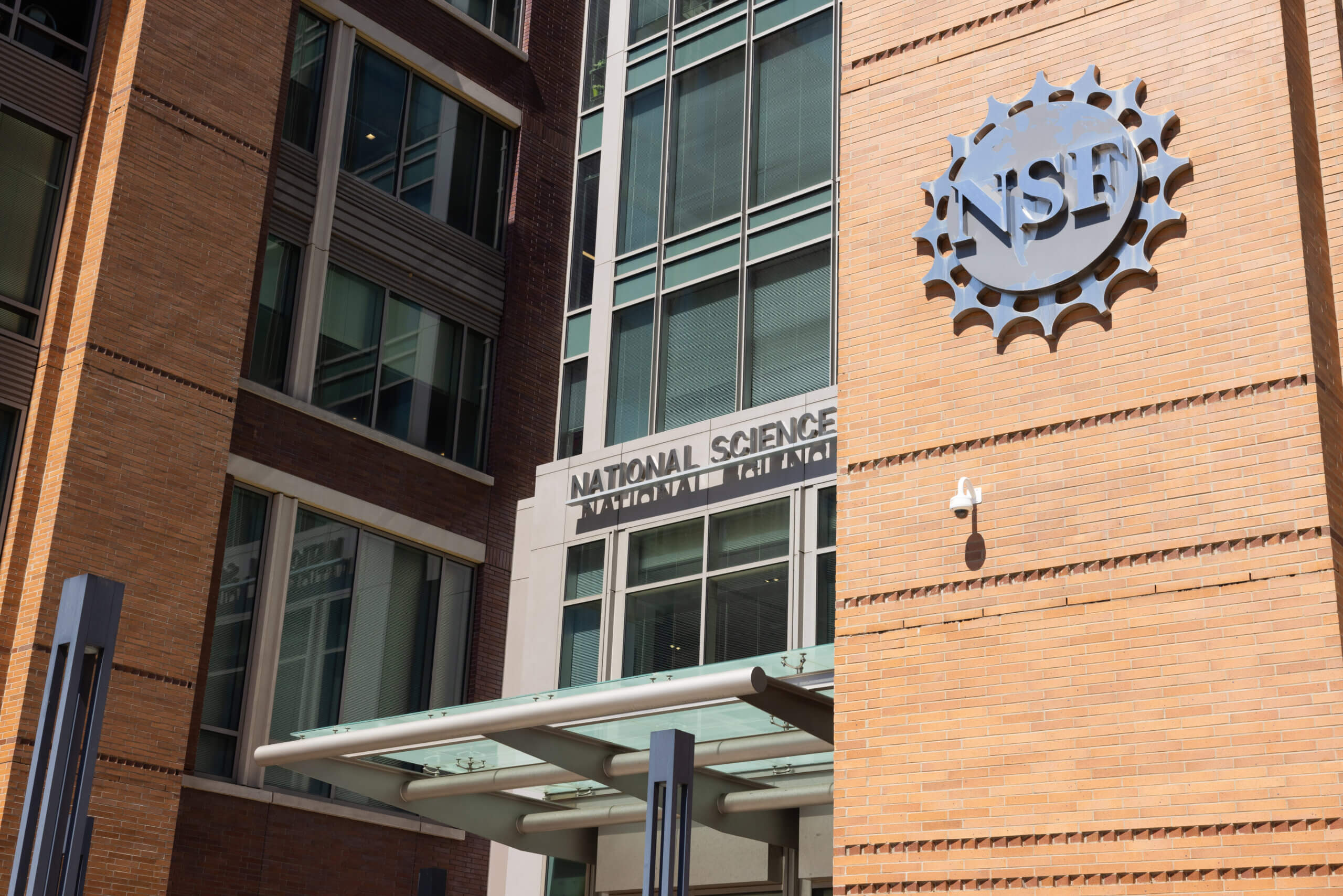
Over the holidays this winter, the White House Office of Science and Technology Policy (OSTP) solicited information on how “to accelerate the American scientific enterprise, enable groundbreaking discoveries, and ensure that scientific progress and technological innovation benefit all Americans.” Building on work to accelerate and reform the American scientific enterprise, I offered suggestions for how to effectively direct this effort to improve the function, productivity, vitality, and health of American science. It is a welcome attempt to wrest American science from the grip of malaise that characterizes the status quo. Science is viewed as slowing down, productivity decreasing, and requiring more resources, more grants, and more personnel to achieve tremendous breakthroughs.
The institutions of science we inherited from the 1950s are ill-suited to the task of innovating in the 21st century. Instead, some grantmaking agencies can be accused, with some cause, of simply serving as tools to fund elite universities or advance ideologies inimical to a large percentage of American taxpayers. Whether through political ideology, perceived financial excesses, or polarization during and after the pandemic, the “no-strings-attached” model of public trust and funding for science, inaugurated in Science the Endless Frontier and the establishment of the National Institutes of Health (NIH) and the National Science Foundation (NSF), has shown wide fissures in collapsing trust and political backlash. For there to be a thorough restoration of the health of the scientific enterprise and the preconditions for acceleration, scientists must reassert that their work is focused on seeking out the truth, on pursuing their research not for ideological reasons, not for advancing a social agenda, but for the sake of discovery. This request for information sought practical steps for improving our science agencies.
Four subjects deserve particular attention: auditing and reforming the Bayh-Dole Act, reforming the way that research projects are funded and assessed, the discovery and training of the next generation of scientific talent, and securing sensitive intellectual property while freeing scientists from unnecessary bureaucratic burdens.
In 1980, Congress passed the Bayh-Dole Act to give contractors and private institutions, such as universities and non-profits, the right to intellectual property produced through federally-funded research. This effort means that investigators have the right to patent any intellectual property which they may generate, such as the physics underlying a new type of sensor or an element of quantum computing architecture. Today, universities control a large amount of intellectual property but do not commercially license this material. Stuart Buck of the Good Science Project has an excellent write-up on Bayh-Dole, which provides further details on the law and its limitations.
There needs to be a systematic audit of Bayh-Dole’s function and effects on the commercialization of intellectual property by researchers, by institutions, and by the federal government. I encouraged OSTP to task agency Inspector Generals to carry out just such an audit and to explore more aggressive use of federal “march-in rights,” allowing an agency to retain the right to the patent.
Since the 1940s, science agencies have largely adopted grants as the method of choice for funding research. Grants application and reporting processes dramatically shape the landscape of research and science policy and must be reformed to accelerate American science. First, the review criteria for funding proposals should be reformed to more fully serve the national interest through productive and ambitious research agendas. This means that the role of peer review in funding decisions, which is believed to incentivize incremental advances over bold and disruptive work, should be re-examined and may need to be curtailed at times. Among the alternatives for evaluating funding proposals are lottery-based funding decisions for high-quality but unfunded proposals which meet a certain minimum threshold but are not individually peer reviewed. Other models, such as the Defense Advanced Research Projects Agency (DARPA) model, place a greater emphasis on program manager talent in selecting projects and trajectories for research.
>>>READ: Military Innovation Could Revolutionize Generators and Accelerate Energy Innovation
New and innovative ways of funding research should also be explored, such as scaling up programs to fund people and not projects. Additionally, in an era when large, team-based science is propagating, there is a need to ensure that small, agile groups of scientists pursuing disruptive and nontraditional research will still receive funding. And agencies need to ensure that authorities to issue high-risk, high-reward funding are not neglected, such as NSF’s EArly-Concept Grants for Exploratory Research (EAGER), a program explicitly designed to increase funding for this type of research and speed up the time from proposal to funding. But EAGER is chronically underutilized by program managers at NSF. And those programs that already avoid the malaise of traditional project selection, such as DARPA, should be rewarded for their ability to avoid the pitfalls of other research offices.
Every regulation, rule, policy, or law that includes new activities for scientists to carry out diverts the time of those scientists to complying with that rule instead of conducting research. Some rules are necessary, particularly when national security sensitivities are involved or when important intellectual property is at risk of being siphoned off by hostile foreign actors. In such cases, regulations play a critical role in deterring bad actors and preventing leaks or security failures.
However, nonscientific criteria, such as mandatory diversity statements and ideological litmus tests, are increasingly being used to advance goals unrelated to scientific research. These requirements bias funding towards proposals that conform to prevailing orthodoxy instead of research with the greatest potential for scientific breakthroughs. Agencies should serve the public, remain accountable to the political oversight of the public’s representatives, and retain an exclusive focus on conducting the best, most effective, and transformative scientific and technological research possible for the sake of the national interest. Scientists will play a critical role in articulating how to achieve those objectives, but other technical experts and political and public representatives must provide direction to the research, which serves to promote the best possible scientific research rather than any short-term ideological goals.
Finally, recent science, technology, engineering, and mathematics (STEM) talent initiatives have attempted to raise all boats through equity and inclusion initiatives to create a broad base for the burgeoning STEM workforce. As necessary as a talented STEM workforce is, these efforts misunderstood the talent development necessary for accelerating the American scientific ecosystem.
Instead of ill-conceived, broad-based initiatives, the NSF STEM Education directorate should focus its energies on identifying and accelerating the most promising domestic STEM talent, relying on early identification of mathematical ability in elementary school. While educational initiatives to support a broad base of STEM talent can and should be undertaken through other programs, these should be viewed through the lens of a workforce development action and not for accelerating scientific discovery. Evidence shows that a very small number of extremely capable scientists have a dramatically outsized role in driving the most transformative scientific work, and it should be the priority of science agencies, in particular the education initiatives of the NSF, to identify and accelerate the achievements of those individuals.
From identifying the most important talent to reconsidering how institutional sclerosis has impacted the translation of intellectual property, there are a variety of ways that the US scientific ecosystem can and should be rapidly accelerated. While Congressional action is needed for lasting change and true revitalization of our science agencies, many of these efforts can be begun and driven by an executive branch keen on seeing a flourishing American scientific and technological ecosystem.
Ian R. Banks is the Director of the Science Policy team at the Foundation for American Innovation and a visiting fellow at C3 Solutions.
The views and opinions expressed are those of the author’s and do not necessarily reflect the official policy or position of C3.