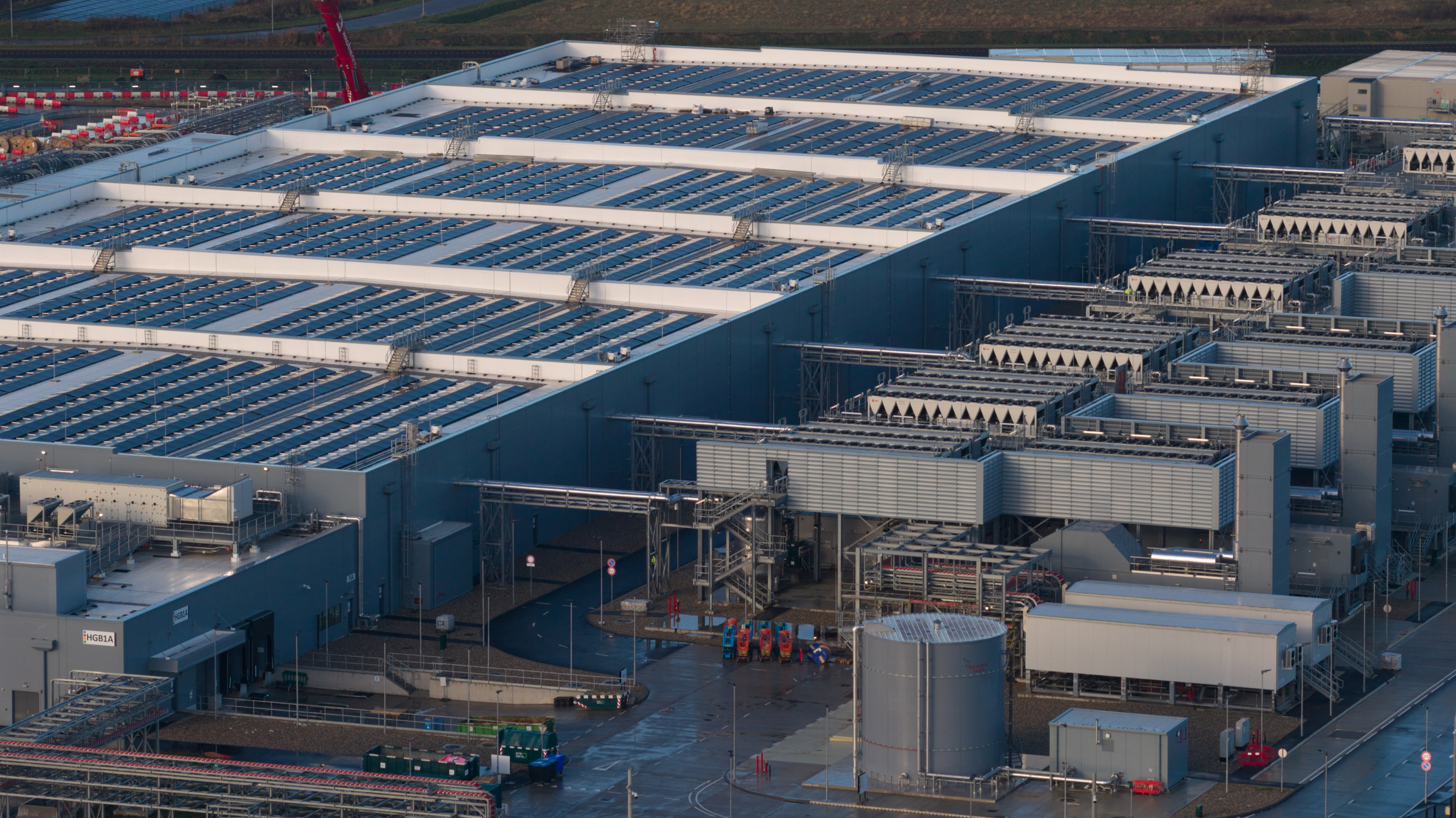
The scale of power requested by data centers joining the grid is straining how utilities have historically connected large customers. When a customer needs vast, uninterrupted power, major system upgrades often follow and those upgrades should be paid for by data centers to the extent they cause them. That’s the premise behind the White House’s Ratepayer Protection Pledge: data center energy costs shouldn’t slide onto household bills. But holding utilities and hyperscalers to that promise is proving harder than it sounds. A recently-filed data center transmission service agreement shows how, when sound ratemaking principles are overlooked, the true costs imposed by data centers become hard to identify and harder to properly bill.
The agreement is between American Transmission Company (ATC) and a Wisconsin utility, filed to power Microsoft’s 900-megawatt data center campus in Racine County. Agreements like this go to the Federal Energy Regulatory Commission (FERC) to ensure they allocate costs fairly among a transmission provider’s customers. This one is an improvement over ATC’s status quo, but it falls short in three ways that could still land costs on the wrong ledger.
First, ATC never disclosed which facilities it’s building for Microsoft, what each costs, or how Microsoft’s payments map onto them. For Microsoft and other ATC customers, this lack of transparency is troubling. ATC claims these facilities benefit no one but Microsoft, so Microsoft alone should pay for them. Without transparent accounting, Microsoft’s cost accountability is unverifiable.
The other two problems stem from how ATC accounts for different costs. All of ATC facility costs, including Microsoft’s new ones, flow into the ratebase—the investment pool that sets the Network Rate every customer pays based on transmission usage. The utility proposes two key provisions meant to keep Microsoft’s incremental costs, incurred during new facilities’ construction, from sliding onto everyone else.
First, Microsoft’s payments are initially pegged to a liability cap equal to the total costs of its incremental facilities. Until that cap is met, Microsoft pays the Network Rate on 100% of its requested transmission capacity, regardless of actual use. Second, those payments are credited annually against the Network Rate, lowering what other customers owe each year. The result: Microsoft covers its new facility costs early, and existing customers get near-term rate relief. But this same structure lets Microsoft underpay for its use of the existing grid up front and risks having it pay twice for its own facilities later.
>>>READ: FERC to Grid Operators: Protect Your Customers Better
The underpayment problem is straightforward. Microsoft’s Network Rate payments that would normally go towards the broader ratebase instead fall under the liability cap. Picture financing a private road and having your toll payments count only toward that road’s debt, not toward the public highways you also drive on. Microsoft’s Network Rate payments fall into the same trap. These payments that are intended to fund the broader grid get diverted entirely toward the liability cap. Microsoft still relies on the existing system similar to any other customer, but doesn’t contribute to it while working off their cap.
The double-payment risk is more intricate. When Microsoft’s cap payments are credited each year, current customers benefit, but the credit only benefits the rate calculation for that year. Microsoft’s incremental facility payments don’t erase those incremental costs from the ratebase. So once Microsoft finishes paying off the cap and begins paying Network Rate charges like an ordinary customer, those same facilities are still in the ratebase generating charges. Microsoft can end up paying for its own equipment a second time, just indirectly.
Poor transparency and mismatched accounting are compounding, not isolated, problems. Yet, they are exactly what FERC’s current review of how utilities connect large customers should address. Two fixes stand out. Regulators could require transparent, facility-level cost documentation when approving these types of agreements. Furthermore, incremental and embedded costs could be billed and credited separately, so compensation from data centers is not only comprehensive, but also distinctly credited to cover the correct costs on utility balance sheets.
Patching these holes in data center agreements doesn’t require massive changes to FERC’s ratemaking practices. It simply demands regulators enforce the transparency and cost-causation principles that fair electricity tariffs have relied on for decades, applying them consistently for a burgeoning customer class. The stakes in FERC’s ongoing show-cause proceedings go far beyond this one Wisconsin docket. As dozens of similar agreements are struck nationwide, what FERC chooses to accept is likely to guide these energy agreement templates for years to come. Mistaken agreements are an instructive, meaningful starting point.
The views and opinions expressed are those of the author’s and do not necessarily reflect the official policy or position of C3.