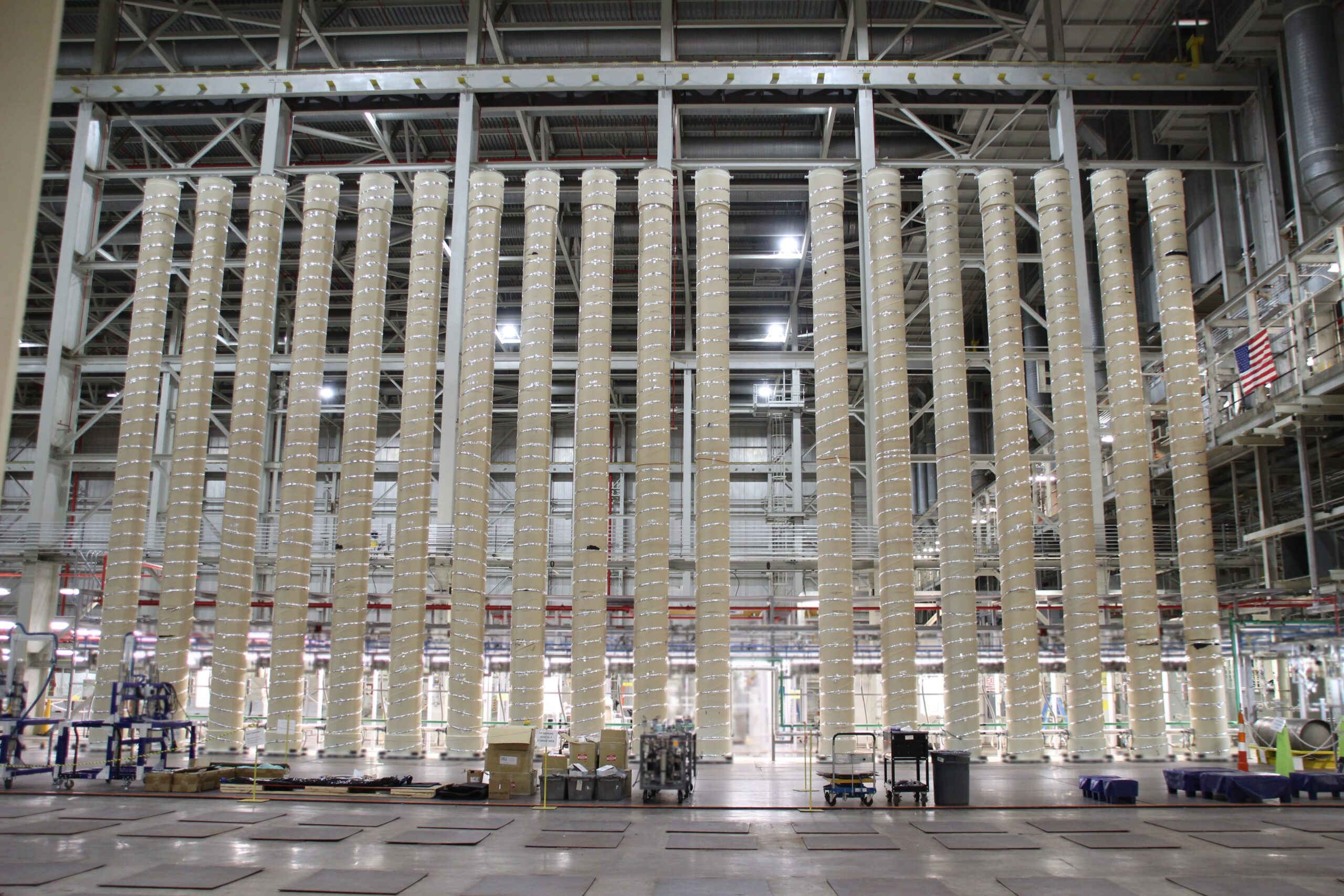
America is betting on a nuclear comeback, driven by a new generation of advanced reactors with lower capital costs and significant potential for economies of scale. Many of these reactors, however, require specialized fuel that has led the government to pour billions into a domestic supply chain. To ensure these investments pay off, federal officials should proactively eliminate artificial procurement barriers and permitting hurdles which threaten to stall nuclear fuel independence.
To be clear, bipartisan laws in recent years and the Trump administration’s actions have already created favorable conditions for the nuclear industry. Reactor demonstrations have been funded at record levels, regulatory processes reformed, and long-term power purchased. What has long remained unclear is where the next wave of advanced reactors will acquire the enriched fuel they need to operate.
That fuel is high-assay low-enriched uranium, or HALEU, enriched to between 5 and 20 percent uranium-235. This fuel, more highly enriched than that in conventional reactors, enables more power to be squeezed out of smaller reactor assemblies. Yet, it also requires new facilities equipped to enrich this fuel to a higher concentration. Beyond the expensive technical effort that is necessary, Russia has been the dominant global player in this market for years, in part because of state support to supply its own reactor fleet. Historically, nobody batted an eye at their dominant position in the supply chain.
But as announcements of new nuclear development expanded and the technology curried favor in Congress a few years ago, lawmakers viewed our Russian fuel dependency—especially in light of the invasion of Ukraine—as an unpalatable risk for the next generation of reactors. Just two years ago, this led Congress to both ban imports of Russian supplies by 2028 and give $2.7 billion to the Department of Energy to aggressively expand U.S. uranium enrichment capacity. The government created a signal for enrichment developers to build here in the United States. Fulfilling Congress’s request, DOE recently announced plans to share in the development costs of three enrichment complexes over the next several years, offering up to $900 million to each facility developer.
>>>READ: The Department of Energy Takes on ALARA
Whether this funding is warranted is a valid debate with compelling points on either side. Supporters view the scarcity of private capital as a symptom of a coordination problem that government can help alleviate. Because enrichment plants take years to license and construct while demand is still emerging from reactors, relying solely on private dollars risks domestic fuel being unavailable when reactors come online. Critics question why these developers can’t raise capital without government intervention. If financiers genuinely forecasted that HALEU demand would materialize, they would buy in on their own. In their view, the lack of initiative from the private sector is a clearer indicator of weak demand than of a problem markets can’t solve themselves.
>>>READ: America’s Nuclear Renaissance Deserves a Fuel Policy to Match
As the government’s support charges forward however, it’s imperative that they preemptively remove regulatory barriers that make these projects—part of which taxpayers are footing the bill for—riskier or costlier than is absolutely justified. Removing obstacles for allied partners interested in building the enrichment orderbook and minimizing burdensome administrative proceedings are two productive roles for public policy.
Leveraging private sector support from nuclear-ambitious allies, such as Japan and South Korea, is a natural first step, but allowing their investment in these facilities requires final U.S. government signoff. This includes granting export licenses through the Nuclear Regulatory Commission (NRC), verifying compliance with bilateral nuclear energy agreements, and receiving approvals through the DOE and State Department. When trusted foreign partners approach a U.S. company, Washington should make it easy for them to invest and arrange offtake. South Korean participation in one facility is already under discussion, and it offers a working template for how buyer interest can strengthen our energy security and alliances at the same time.
There is also a noteworthy opportunity to expand permitting efficiency aside from the accelerated license reviews already being granted by the NRC.
DOE is seeking to cluster facilities across the nuclear fuel supply chain in what it calls Nuclear Lifecycle Innovation Campuses. Done well, those campuses could bring enrichment closer to upstream and downstream infrastructure, which would lower transportation risk, improve coordination, and make it easier to permit the fuel cycle. Delivering fuel involves logistics, security, and transportation challenges. Transporting HALEU specifically requires rigorous physical security and route planning, compliance with strict packaging regulations, and additional NRC approvals to ensure the fuel’s stability. In short, bringing other nuclear manufacturing steps nearer to enrichment facilities can lighten both short- and long-term administrative burden on the U.S. nuclear industry.
As some American companies and utilities look to nuclear energy to provide abundant, reliable electricity, the potential for a fuel constraint looms large. If the federal government chooses to sustain its financial commitments to developing uranium enrichment domestically, it should pair this with a commitment to regulatory efficiency. As the DOE inks billion-dollar contracts with HALEU development prospects, policymakers owe it to the American people to welcome procurement from our global allies and ease the nuclear permitting burden.
The views and opinions expressed are those of the author’s and do not necessarily reflect the official policy or position of C3.