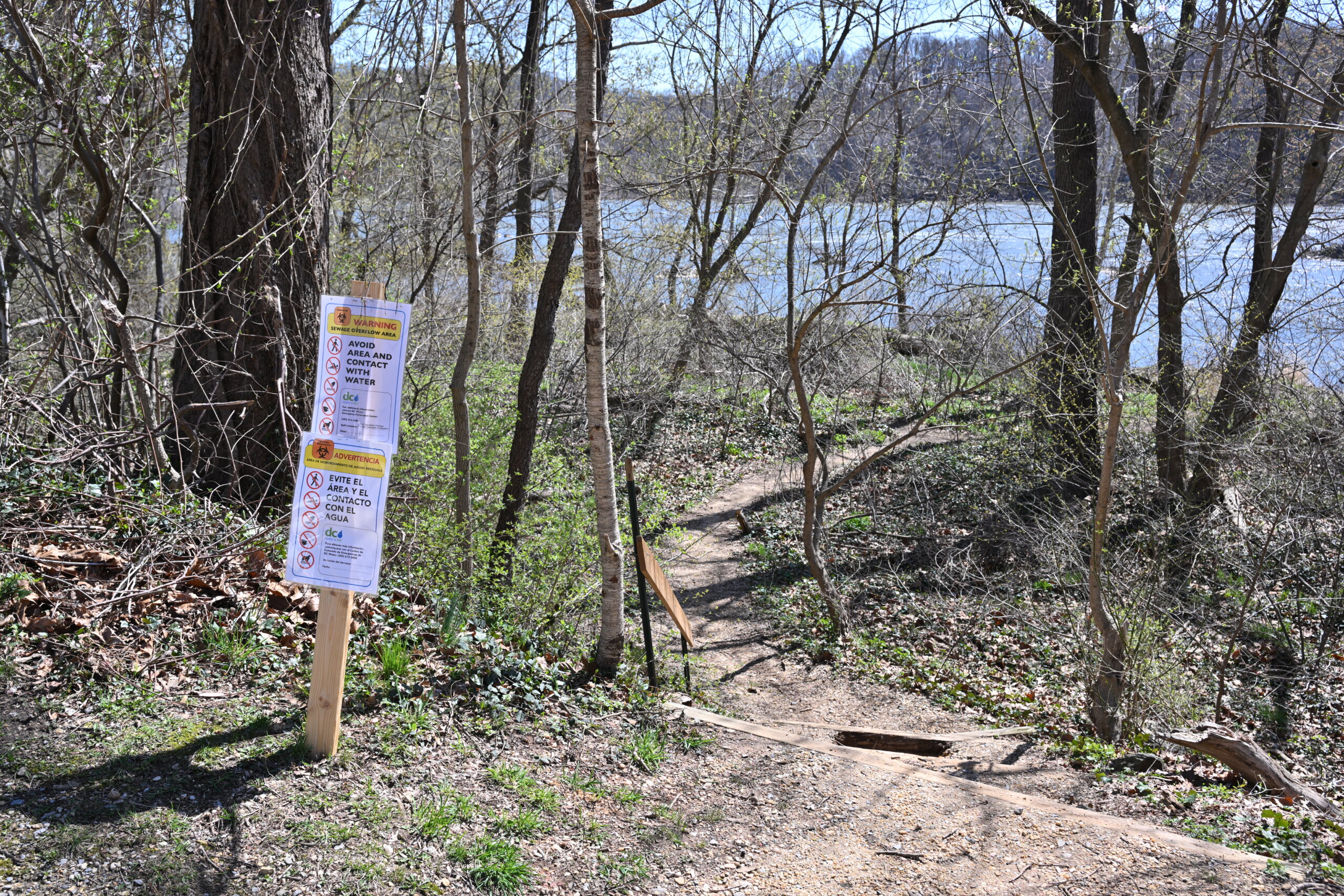
For five days, the equivalent of 350 Olympic-sized pools’ worth of sewage flooded into the Potomac River in a suburb of Washington, D.C. The cause? A clear failure in our permitting systems.
Many Americans are all too familiar with the federal government’s bureaucratic nature. But red tape extends farther than minor nuisances. As the Potomac River fiasco shows, government underresponsiveness and overregulation can produce a toxic—literally—mix.
An interceptor pipe along the river ruptured on January 19, causing the river’s concentration of dangerous E. coli bacteria to skyrocket by almost 300,000 percent.
In 2018, when the District of Columbia Water and Sewer Authority (D.C. Water) conducted a routine pipe inspection along the riverbank, it immediately sounded the alarm: inspectors noticed the pipe’s reinforcements were eroding, very close to the site of the eventual pipe rupture. When D.C. Water alerted the U.S. National Park Service (NPS) about the situation and the need for urgent remedies, the National Park Service began a lengthy, years-long environmental review that, at the time of the pipe rupture, nearly eight years after finding pipe erosion, was still ongoing.
The NPS’s concern was with mitigating the impact of repairs on select plants and animals, including a species of wildflower. And, in order to fix the pipe, hundreds of trees needed to be cut down.
Ironically, the NPS’s sclerotic pace and a permitting process that failed to balance the risks of delay resulted in environmental disaster. The prospect of even minor damage to a species of wildflowers, trees, and bats ultimately endangered the safety and public health of millions of humans who live near the Potomac River, whose tributaries are the D.C. area’s primary water source. It also likely harmed countless aquatic species by subjecting them to concentrated bacterial exposure. Long-term impacts remain unknown.
>>>READ: How The SPEED Act Charts a Path Forward for Permitting
Recent media reporting, if accurate, casts the NPS in an even harsher light. D.C. Water reportedly had a plan to ensure the protection of the bats and wildflowers that were the focus of NPS’s concern. It also committed to replanting every tree it cut down as part of the proposed repairs. The environmental review requirements, however, continued at its laggard place, preventing permits for the repairs from being issued. National Park Service spokeswoman Christiana Hanson acknowledged the process was lengthy, but blamed revisions to D.C. Water’s repair plans that forced the agency to restart its environmental assessment each time.
Much of the permitting conversation focuses on how delays slow the construction of new projects and hold back industry. According to C3 Solutions, building a new wind or geothermal project can take seven to ten years.
While many environmental statues contribute to lengthy processes, including the Endangered Species Act, the Clean Water Act, and the National Historic Preservation Act, the National Environmental Protection Act (NEPA) is at the core of this issue. This law mandates that the federal government consider environmental factors on par with other factors in decisions concerning permits, land management, and construction.
These reviews often weigh environmental factors far out of proportion to the needs of affected Americans, as the Potomac sewage spill highlights.
For eight years, D.C. Water desperately waited for permits to be awarded that would allow it to conduct the relatively simple repairs on less than a mile of pipe.
>>>READ: Policy Inaction Threatens the West’s Energy and Water Supplies
They never came, and the ticking time bomb went off. Eventually, the pipe burst on January 19. For six days, sewage spilled into the Potomac. Not until January 24 did the sewage get redirected into an empty canal. And not until March 14 did the repairs to the interceptor get completed.
The lesson from the Potomac spill is straightforward. A permitting process that does not account for the risks of delay can end up undermining the very environmental and public health goals it is meant to protect. With initial cleanup efforts taking months, there is still work to be done. Downstream of the spill, unsafe levels of E. coli are still being reported, and the water is unsafe to swim in.
Around America, many damaged pipes, walls and critical infrastructure have potentially been detected, but environmental reviews may similarly be impeding needed repairs. Millions of Americans are potentially in danger of bursts and collapses that are completely preventable.
Prevention is the best medicine. However, environmental review and permitting wait times block progress and invite failure. An ounce of prevention is worth a pound of cure, as the saying goes.
Water contamination is a serious public health risk. Though the Potomac spill is a concerning, even tragic, lesson, it can and should be used for good. It can serve as a catalyst for policy change that reforms bureaucratic, burdensome permitting policies. The answer is to make environmental reviews more responsive. Comprehensive permitting reform bills already on the table—such as the SPEED Act, the PERMIT Act, and the ePermit Act—offer a path forward by streamlining reviews, reducing duplication, and improving coordination across agencies.
Permitting delays are, like the bystander effect, harming the public without any risk of accountability. Policymakers have a choice between stagnation and innovation. America should step up to protect our resources from self-strangulation.
The views and opinions expressed are those of the author’s and do not necessarily reflect the official policy or position of C3.