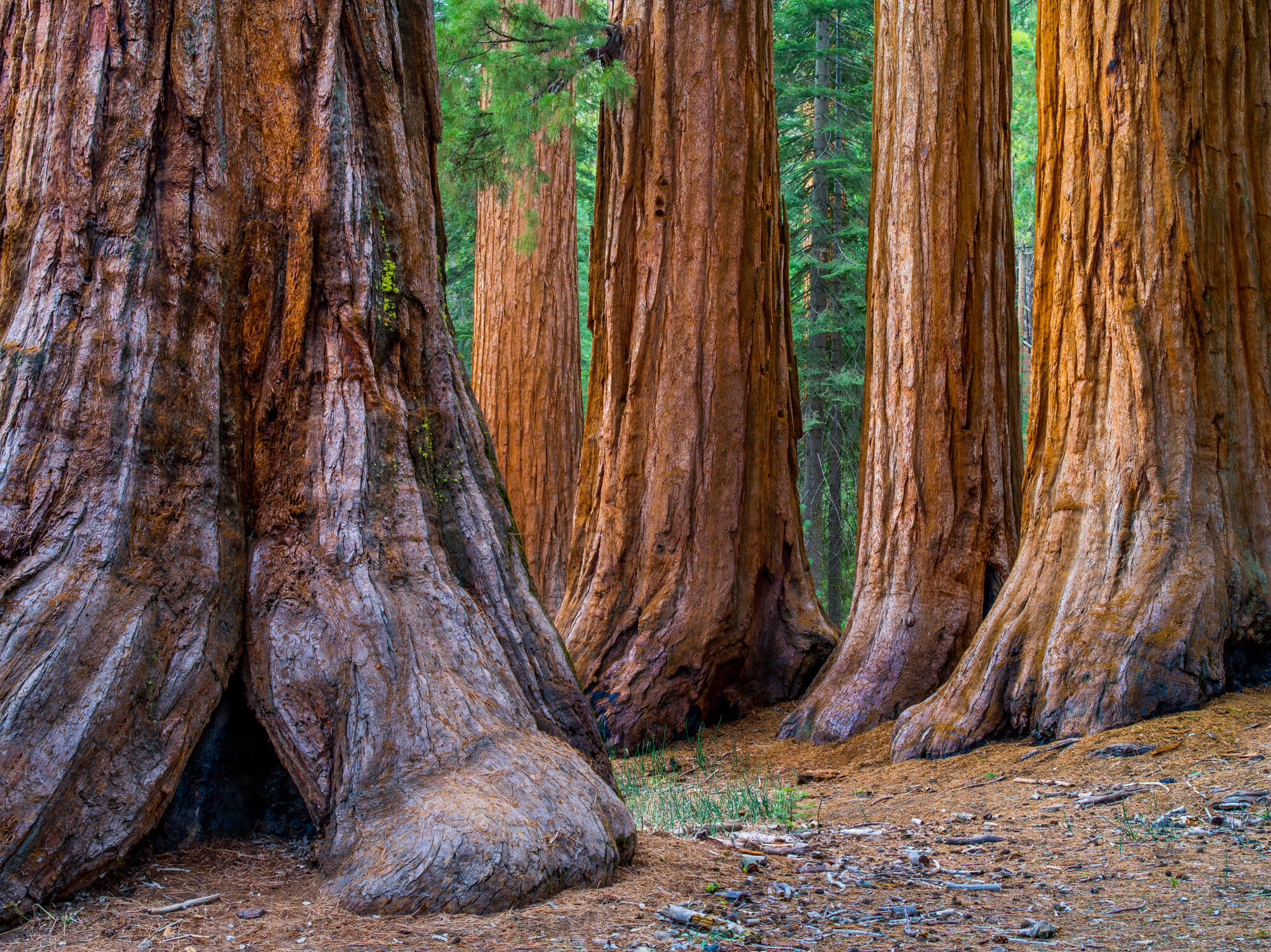
A few years ago, I travelled to California’s Sequoia and Kings Canyon National Parks and, for the first time, stood in awe beneath the ancient giant sequoia trees. A group of my friends went up to the base of one and locked hands, trying to circle the sequoia trunk. To my amazement, even with over 75 feet of wingspan between the 15 of us, it wasn’t enough to wrap around the circumference of a single tree.
Giant sequoias are an iconic American species that bring millions of visitors each year to the national park to marvel at their beauty. But, in the past decade, nearly 20 percent of sequoia trees have died in catastrophic wildfires. And, while sequoia seeds have been planted across other parts of the world, including the UK, their only native habitat is the Western slopes of California’s Sierra Nevada mountain range, a region where nearly three-quarters of the land is classified as high-fire risk.
Ironically, giant sequoias are naturally fire-adapted, even requiring fire for their survival. Fire acts as a catalyst for sequoia reproduction by drying out and opening their cones, releasing their seeds. Because of the cone’s resilience, the species would cease to exist without fire. The trees even have bark that is remarkably thick enough to resist fire and protect the trunk’s core, which keeps the species alive. However, sequoias have evolved with regular, low-intensity fires. Today’s wildfires, fueled by over a century of fire suppression and a changing climate, burn with unprecedented size and severity, far exceeding what the trees have adapted to withstand.
To change course and save this awe-inspiring species, the “good fire” they have long known must be brought back to these areas, and catastrophic “bad fire” must be reduced. Thankfully, Washington, D.C., is beginning to respond. Just this week, both chambers took steps towards saving this iconic tree. Led by Representatives Vince Fong (R-CA) and Scott Peters (D-CA), the Save Our Sequoias (SOS) Act passed the House on Monday with bipartisan support. On the same day, Senators John Curtis (R-UT) and Alex Padilla (D-CA) introduced a companion bill in the Senate.
>>>READ: Policy Inaction Threatens the West’s Energy and Water Supplies
Giant sequoias are located across multiple federal, state, and tribal agencies’ land, including the Bureau of Land Management, Forest Service, and National Park Service. Historically, this has meant management efforts were fragmented across agencies. By requiring collaboration among the Interior and Agriculture departments, the Governor of California, and the Tule River Tribe, the SOS Act would break down cross-jurisdictional bottlenecks and accelerate effective forest management.
Collaboration would occur through the Giant Sequoia Lands Coalition (which the bill would codify) and shared stewardship— a collaborative approach in which states and tribes jointly plan and prioritize forest management projects with federal agencies. The bill would also direct the use of Good Neighbor Authority (which allows states, tribes, and counties to implement restoration projects on federal lands), in Sequoia, Kings Canyon, and Yosemite.
The bill declares an emergency and enables restoration work to move forward without a full National Environmental Policy Act review. Far from weakening environmental protection, granting that authority is critical. At the current pace, it would take the Forest Service more than 50 years to treat the 19 most at-risk sequoia groves in the country, a timeline the species cannot afford. With faster treatment efforts, more groves will be safeguarded from out-of-control wildfires.
>>>READ: Pray for Snow, Plan for Fire
The treatments the bill authorizes aren’t novel. They’re exactly what sequoias evolved with. Prescribed burning alongside mechanical thinning and hazard tree removal can bring back the good fire these trees have always needed.
The bill also provides new funding pathways for hazardous fuels reduction treatments and for restoration and reforestation efforts to bring sequoias back to groves destroyed by recent wildfires.
Some of the trees that burned down in the 2020 Castle Fire and the 2021 KNP Complex Fire were over 3,000 years old. Yet, they were unable to survive just two recent fire seasons. The Save Our Sequoias Act cannot bring those trees back, but it can protect the rest from the same fate.
The views and opinions expressed are those of the author’s and do not necessarily reflect the official policy or position of C3.