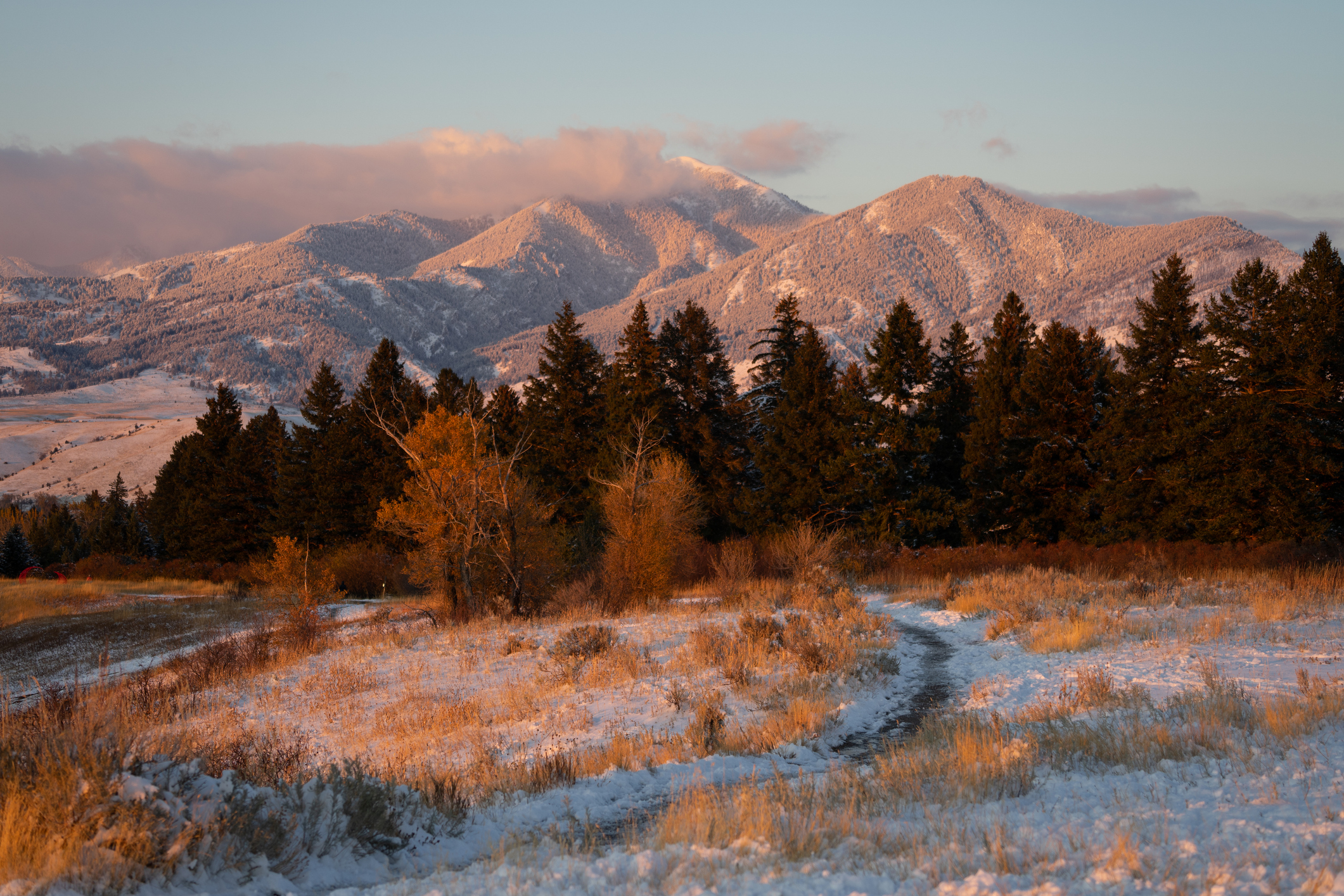
Washington, D.C., may long be tired of the frigid temps, above-average snowfall, and icy roads. But out West, signs reading “Pray for snow” are everywhere. Utah Governor Spencer Cox even encouraged Utahns to join together in prayer for snow.
This winter, Oregon, Colorado, and Utah have all reported the lowest statewide snowpack since the early 1980s, and Salt Lake City has gone its longest stretch without even an inch of snow since the 1890s. Shockingly, since December, more than 8,500 daily record high temperatures have been broken or tied across the western U.S.
More than just a bane to ski season, the record snow drought and warm temperatures are causing deep concerns about the summer. Wildfire season is one of the most obvious threats, with vegetation and forests primed to burn earlier and hotter than in a wet year.
The Eastern U.S. may be in better shape due to above-average snowfall and cooler temperatures, but it’s certainly not immune to wildfire threats. In their 2025 annual report, the National Interagency Fire Center found that nearly half of all wildfires last year ignited east of the Mississippi River.
As this recent data shows, the wildfire crisis knows no geographical boundaries or political ties. Commonsense legislation like the Fix Our Forests Act (FOFA) is to protect communities and the environment. With a few more months until peak wildfire season, policymakers should prioritize addressing America’s wildfire crisis now.
>>>READ: Taking Action to Reduce Wildfire Risk
Commonsense Litigation Reform
The Fix Our Forests Act is a bipartisan bill that would expand and expedite key active forest management on federal lands. Active forest management includes prescribed fire, mechanical thinning, targeted grazing, and other practices that improve forest health and wildlife habitat. Much of the bill includes reforms C3 Solutions has long championed, like litigation reform, expanding categorical exclusions, and investing in innovative research and development.
Sections 121 and 122 of FOFA dramatically cut the allowable time to sue forest management-related projects. Sec. 121 makes it harder to obtain court injunctions that delay projects, and Sec. 122 (repealing the Cottonwood ruling) eliminates the requirement that already-approved forest management projects restart Endangered Species Act consultations when new information emerges about an endangered species. These provisions are intended to limit the frivolous, drawn-out litigation that has gridlocked these projects.
Though more controversial, repealing Cottonwood will likely benefit endangered species and long-term forest health. In 2017, litigation tied to the Cottonwood ruling held up a forest management project in Montana over concerns about the Canada lynx. Ironically and tragically, that same year, a wildfire raged through the area where the halted project was located, ultimately harming the Canada lynx and its habitat.
>>>READ: Policy Inaction Threatens the West’s Energy and Water Supplies
Expanded Categorical Exclusion Acreage
Another C3 Solutions long-advocated reform, Section 106 expands categorical exclusions for forest management projects, disease and pest projects, and fuel breaks from 3,000 to 10,000 acres. A categorical exclusion exempts these critical projects from the requirement to prepare lengthy environmental impact statements or environmental assessments under the National Environmental Policy Act (NEPA). By expanding CEs, more can be done in less time. If FOFA passes early this year, this reform alone could make a difference heading into the wildfire season.
Innovation and Technology Advances
One of the most game-changing parts of FOFA is the creation of the Wildfire Intelligence Center. This joint USDA-DOI center will become the go-to spot for everything wildfire-related: real-time predictions, preparedness support, coordination between state and federal agencies during fires, and recovery planning.
Currently, wildfire data is scattered across different agencies and research labs. This center will change that by compiling key data into a single place, so federal and state agencies, tribes, and firefighters have streamlined guidance.
READ: Grazing as a Strategic Fire Prevention Solution
While using livestock for vegetation management isn’t exactly cutting-edge innovation, it works. And, it’s mutually beneficial. Cattle (or bison) get to eat, and the land gets healthier. Streamlining grazing permits and creating temporary permits specifically for fuel reduction and invasive grasses (which are often more likely to burn) is a commonsense step forward.
These policy provisions represent just a fraction of what’s in FOFA’s 200 pages. Still, they show that the bill can clear bottlenecks and accelerate proven forest management for the benefit of our forests and communities.
This abnormal winter offers lawmakers a chance to think ahead. What will the 2026 wildfire season look like after higher-than-normal temperatures and such low snowpack? The House has done its part. Now it’s up to the Senate to advance this legislation and fix our forests before fire season begins.
The views and opinions expressed are those of the author’s and do not necessarily reflect the official policy or position of C3.