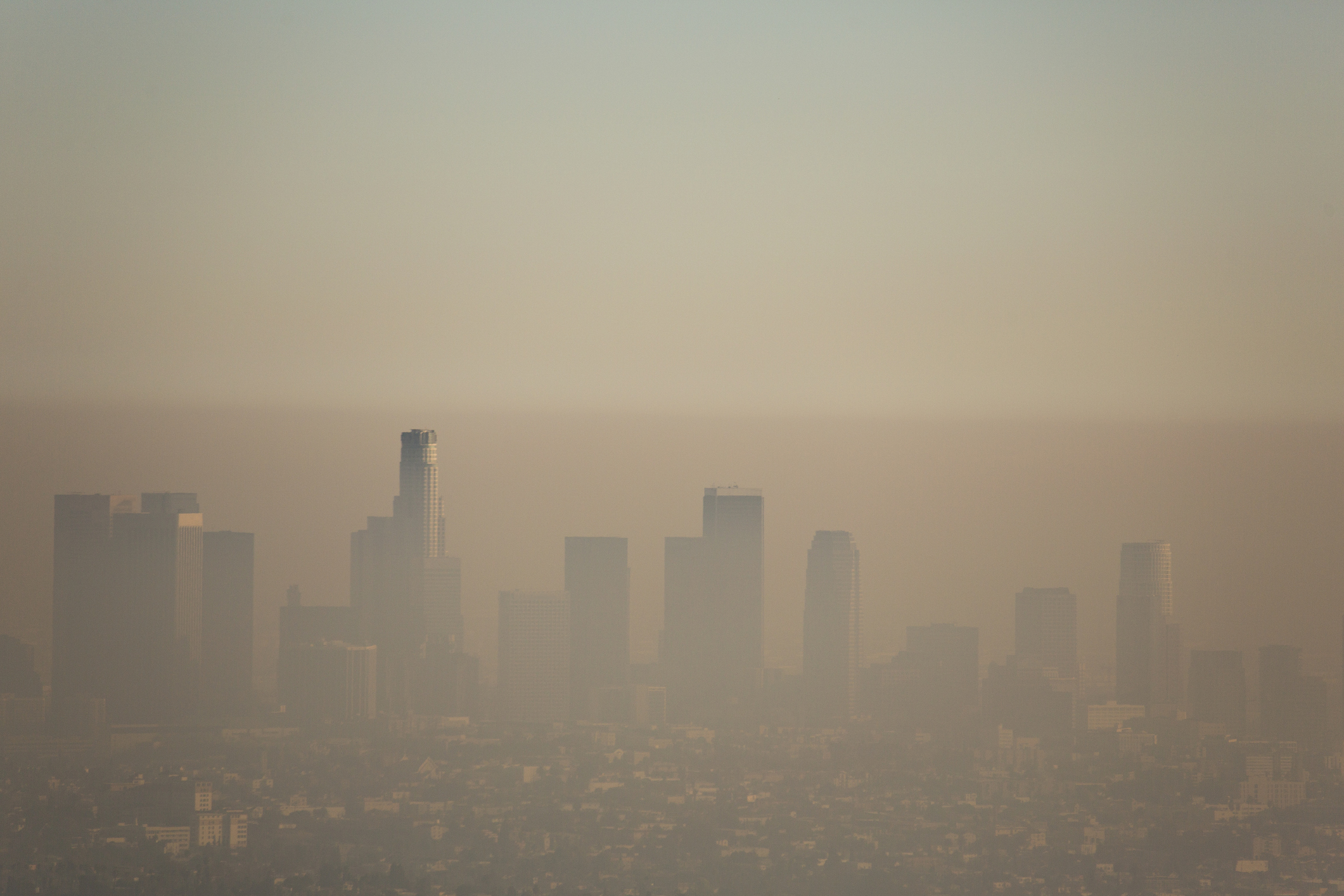
The Environmental Protection Agency’s recent decision to temporarily stop assigning dollar values to the projected health benefits of reducing fine particulate matter (PM2.5) and ozone has sparked renewed controversy over air pollution regulation. As I discussed last week, the agency framed the move as a response to persistent uncertainty in estimating PM2.5 health effects, not as a withdrawal from regulating air pollution or considering public health impacts. Even so, environmental activists quickly criticized the decision as an abandonment of science and a threat to environmental progress.
That reaction, however, obscures the more consequential problem at the center of the air pollution debate, especially the treatment of PM2.5, or microscopic airborne particles less than 2.5 micrometers in diameter. The difficulty with PM2.5 regulation is how scientific uncertainty is treated when it is translated into regulatory analysis. The EPA’s current move is a positive step towards incorporating more forms of uncertainty when evaluating air pollution regulation, but a more durable solution requires legislative reform.
The source of the tension is ultimately the key role that PM2.5 now plays in modern environmental regulation. Projected reductions in these tiny airborne particles account for a huge portion of the estimated benefits used to justify federal rules, often appearing as secondary “co-benefits” of regulations aimed at entirely different pollutants or policy goals. As a result, assumptions about PM2.5 do not merely influence individual rules; they shape the economic justification for a broad portion of the regulatory state.
Yet PM2.5 is not a single chemical with a known and consistent toxicity. It is a regulatory category that lumps together a heterogeneous mix of particles from very different sources. PM2.5 emitted by a coal-fired power plant, vehicle exhaust, a commercial kitchen, or windblown dust is treated as interchangeable for regulatory purposes, despite evidence that toxicity may vary substantially by composition and source. While this aggregation simplifies monitoring and enforcement, it also means that estimated benefits depend critically on whether regulations reduce the most harmful particles, a source of uncertainty largely ignored in benefit calculations.
PM2.5 regulation also rests on a second, equally consequential assumption: that health benefits continue to accrue even at today’s historically low ambient pollution levels. Regulatory analyses typically assume a smooth, linear relationship between PM2.5 exposure and mortality down to background concentrations, effectively ruling out the possibility of a threshold below which further reductions no longer improve health. Determining whether such a threshold exists is difficult, and in the absence of definitive evidence regulators have assumed none does. But this excludes the possibility that additional reductions deliver little or no benefit at current exposure levels and systematically understates uncertainty.
>>READ: Particulate Matter and the Limits of Epidemiology
The existence of these ambiguities, along with epidemiological uncertainty, help explain the EPA’s recent decision. The agency has acknowledged that its past analyses often conveyed a false sense of precision, overstating confidence in monetized health benefits relative to what the underlying science could support. Given the enormous economic consequences of environmental regulation, that is a serious problem.
To the extent that this decision reflects a willingness to confront the full scope of scientific uncertainty, it is a constructive step. A regulatory process that more honestly incorporates epidemiological and structural uncertainty would improve the credibility of environmental regulation. But uncertainty is not merely a technical flaw that can be eliminated through better modeling; it is an unavoidable feature of the scientific process.
A recurring shortcoming across public policy is the belief that policymakers can simply “follow the science,” as though scientific evidence alone can dictate regulatory outcomes. Science can identify risks and inform tradeoffs, but it cannot resolve the value judgments that regulation inevitably requires. Those judgments involve economic costs, acceptable risk, and distributional consequences. Treating scientific estimates as if they alone can resolve these questions places demands on science that it cannot meet and obscures the normative choices embedded in regulation.
EPA’s effort to better account for uncertainty may improve how the agency communicates the limits of its analyses. But a durable solution requires more than discretionary changes in agency practice. It requires legislative reform to better align environmental statutes with the proper role of science in policymaking, treating scientific evidence as an essential input to judgment, not a substitute for it. Without such reforms, debates over PM2.5 will continue to flare up episodically, without producing a stable or transparent framework for environmental regulation.
The views and opinions expressed are those of the author’s and do not necessarily reflect the official policy or position of C3.