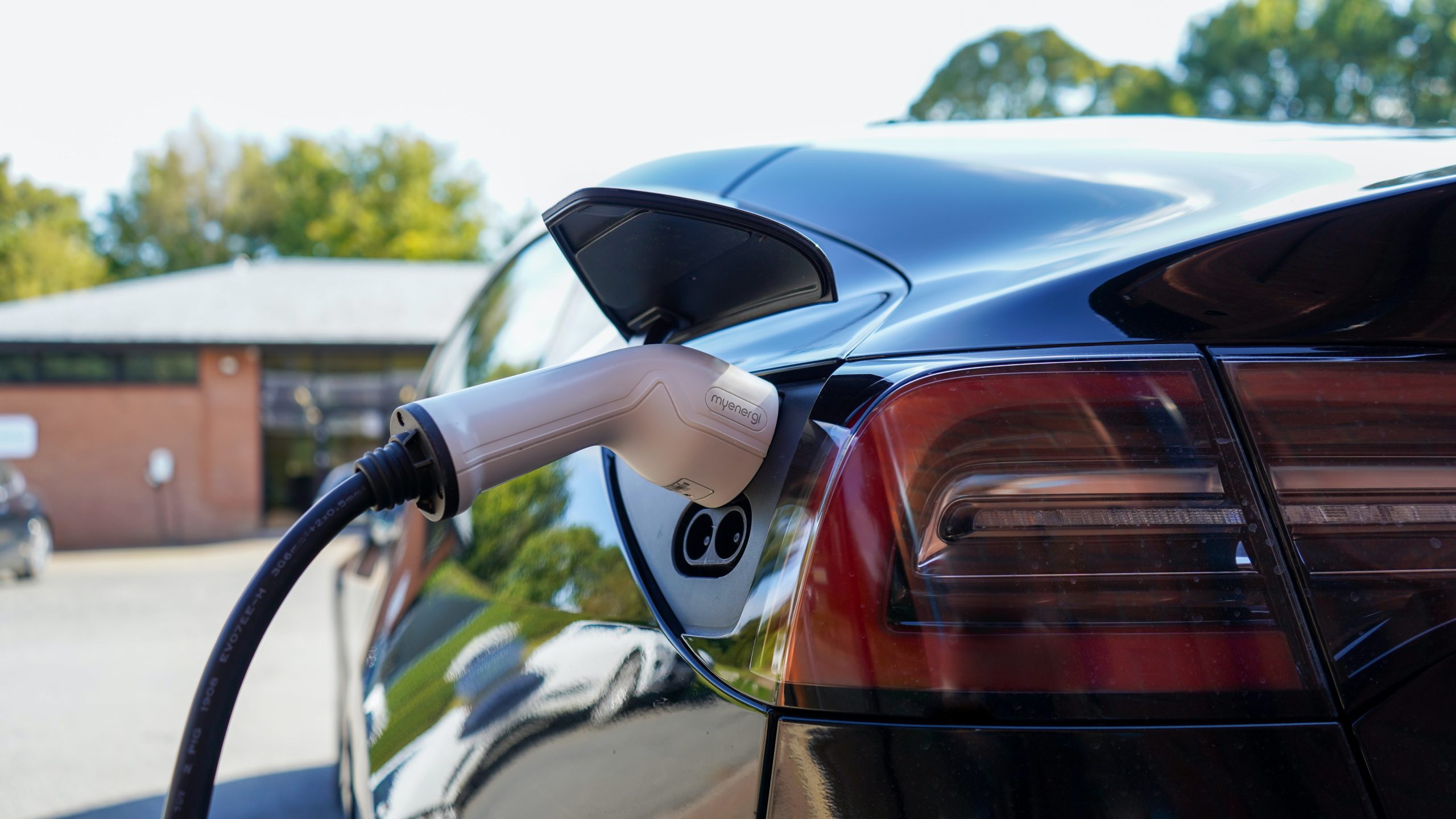
One in three Americans says they would consider an electric vehicle as their next purchase, down from 42 percent in 2022. While cost and ideological differences explain the skepticism, another significant concern among car buyers is range anxiety and longer charging times. Most of the significant investments in charging stations are happening in cities. Commuters in rural areas have to drive long distances every day, often in cold weather, which can drain batteries faster. The idea of waiting forty minutes to an hour on a fast charger is not practical.
That is where battery swapping comes in. Instead of plugging in and waiting, drivers can stop at a station, have their empty battery taken out, and have a fully charged one installed, all within a few minutes.
This concept isn’t just theoretical; it’s already in use. In Europe, companies like NIO and others are piloting battery swap stations, where drivers can exchange their depleted battery for a fully charged one in just a few minutes. The model has been most extensively deployed in Asia, with over 1,600 swap stations already operating, showing that the technology can work at scale. The company has placed many of these stations along highways, which helps people traveling long distances between cities. In Taiwan, another company called Gogoro has created an enormous swapping network for electric scooters. Riders pay a subscription fee and can swap their scooter battery at thousands of small kiosks around the island. The common point in both cases is that people do not have to wait to charge. Instead, they keep moving, and that convenience makes owning an electric vehicle much more attractive.
The situation in rural America is very different. Towns are spread far apart, and people often need to drive fifty or even one hundred miles just to get to work, school, or the nearest grocery store. Building fast chargers in every small town is very expensive, and since fewer people live in these areas, companies might not make enough money to justify it. That means rural drivers are stuck with fewer options, and many hesitate to buy an electric car at all. Battery swapping could help. Instead of dozens of chargers spread across every town, one well-placed swap station could serve a large region. Drivers could plan their trips around these stations, much like people once did with gas stations when they first started appearing.
Of course, there are challenges. The biggest one is that cars in the United States are made by many different companies, each with its own battery designs. In China, NIO controls the design of both the vehicles and the batteries, so everything fits perfectly into the swap system. For rural America, this would be harder. A universal battery design is needed, or cooperation among a few big manufacturers. A good starting point might be fleets rather than individual cars. Delivery vans, postal trucks, farming equipment, or even school buses often come from the same supplier and follow regular routes. If those fleets used swappable batteries, they could keep running all day without needing to stop to charge.
There are also interesting possibilities for farmers. Tractors and other farm vehicles run almost entirely on diesel because they need to work for hours without stopping. But if batteries could be swapped quickly, electric tractors could do the same work without forcing farmers to wait half a day to recharge. Rural delivery services like UPS or FedEx could also save time by swapping batteries on long routes instead of scheduling stops at chargers. In both cases, swapping would make electric power practical where charging is too slow.
Another benefit is energy independence. A battery swap station in a rural community could double as a local energy hub. For example, solar panels or wind turbines could charge the batteries during the day, and then those batteries would be ready for drivers, farmers, or delivery services. This model would not only provide power for vehicles but also create local jobs and keep money in the community instead of sending it all to big utility companies. Over time, swap stations could become part of the local economy, just like gas stations and repair shops are today.
Battery swapping is not a perfect fix for every situation. Some drivers will still want home charging, and urban areas will still rely on fast-charging networks. But in rural America, where the usual charging model is more complex to make work, swapping could fill the gap. It gives drivers the convenience of quick refueling, makes long-distance travel more realistic, and opens the door for fleets and farm vehicles to go electric. The experiences of NIO in China and Gogoro in Taiwan show that the technology works, and with the right policies and partnerships, it could work in the United States as well.
At the same time, many people will continue to rely on gasoline and diesel, and that’s okay too. The point is not to force everyone into one model, but to give consumers real choices. Whether it’s battery swapping, fast charging, or traditional fuels, innovation and competition should determine what works best. The role of businesses and entrepreneurs is to meet people’s needs, without government-imposed subsidies or mandates that dictate winners and losers. If rural communities are to be part of the electric future, solutions like battery swapping deserve serious attention, but so does keeping consumer choice at the center.
The views and opinions expressed are those of the author’s and do not necessarily reflect the official policy or position of C3.